In a Webex meeting with Mathematics Professor Vince Thompson, and in a phone interview with Chemistry Professor Tanya Schneider, I was able to get a sense of how professors using mathematics and lab requirements have adapted their courses in the face of remote learning.
“I could kind of see this coming,” Professor Thompson explained, in regards to the College’s decision in March to switch to online learning. After attending WebEx training in preparation for the move to remote learning, Professor Thompson faced a technological issue that he was ultimately able to resolve. In the first WebEx training, Professor Thompson noticed that there was no camera detected on his device. “I never use the camera, so that was the first I had heard of it,” he explained. Loaning a computer from the College, he stated, “I put in for an external webcam… and I got an email a few days later that all [my] orders were canceled, so [the College] suggested that I go out and buy one.” After going to several stores, it was not until the fifth store that Professor Thompson was able to purchase an external camera. Ultimately, “it worked out fine.” Professor Thompson uses document cameras in his classes to project his lessons. That being said, he saw an external camera as perhaps more beneficial, for it would allow him to move the camera to show his students his documents virtually.
“In the class, the students don’t even see me. What I do is, I aim [the camera] down at a paper and then I just write on the paper, or I share a document,” Professor Thompson noted. He taped to the external camera a drum microphone that he uses for the bass drum when his band performs outdoors In this way, Professor Thompson is able to conduct a class that reflects the in-person class dynamic for his 80 students.
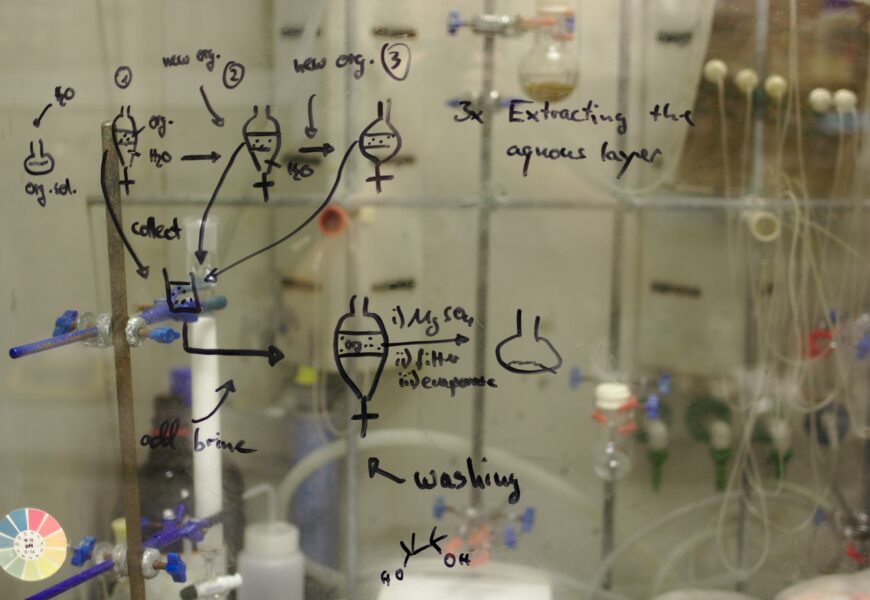
Professor Schneider has also adapted various technologies to her remote teaching. She has her Organic Chemistry and Biochemistry courses meet three times a week each. Two of the meetings each week are synchronous, while the third is a time when Professor Schneider provides students with resources for them to use on their own time. For instance, she provides students with “videos of people doing experiments and what it might be like to do them.” With the vast web at her fingertips, Professor Schneider has taken a great deal of time “to make sure [the experiments] are actually chemically correct, which some of them were not,” she said. While “it’s not the same experience [it’s] nice that those videos exist,” Professor Schneider added. In the absence of a blackboard, Professor Schneider uses a tablet with a pen which allows her to draw chemical structures. “Even through WebEx, I am able to draw in real time,” Professor Schneider noted.
Professor Thompson has his students engage in labs of sort, using Excel in the computer lab. He also has student tutors who are at the top of each of his classes available to assist students. He explained that the Academic Resource Center “kind of jumped in and helped them out a bit. They have their own Google Meet address,” and continue to meet at the same times that they did when they were on campus.
Both professors stated that attendance in their courses has fared well since the move to remote learning. “People are still coming and between adding comments to the chat window and questions, I still hear from some students,” Professor Schneider said. Professor Thompson also noted that while students are not required to have their cameras or audio on in his class, the WebEx chat feature has kept students connected.
Because the move to remote learning occurred in the middle of the semester, Professor Thompson admits,“If I didn’t know [my students], this would be a really odd way of doing things.” Professor Schneider shared a similar sentiment: “One benefit was that I knew my students fairly well before this. It would have been very hard to start the semester this way.” Professor Schneider concluded that she hopes to continue such effective correspondence remotely.