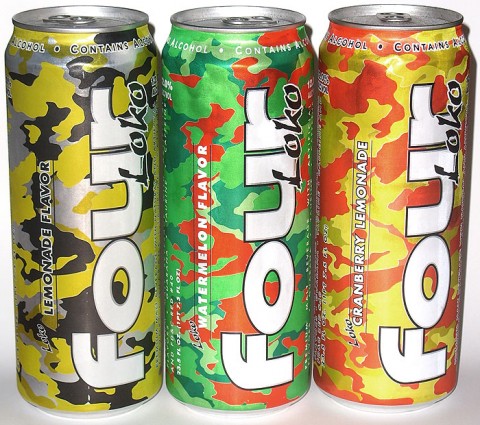
Two weeks ago I received a short e-mail from my mother. The message contained a link to a New York Times article paired with the warning, “Stay away from this one!” After clicking the link, I discovered that my mother thought it necessary to warn me about a highly-caffeinated, highly-alcoholic energy drink named Four Loko.
The New York Times briefing stated that a 23.5 ounce can of Four Loko is equivalent in alcohol content to five or six beers. Over the past month, twenty-three students from Ramapo College, NJ, were hospitalized after consuming Four Loko. In one night alone, nine students from Central Washington University, WA, were transported to the hospital after drinking Four Loco at an off-campus party.
The drink has been infamously dubbed “blackout in a can,” and “liquid cocaine,” and student opinions vary. One Conn student described her experience with drinking Four Loko as feeling as though her “heart was about to beat out of [her] chest.” One senior said, “I felt really drunk, but that’s because we were drinking a lot. I wonder if I would have felt that way no matter what.”
According to Ruth Grahn, Associate Professor of Psychology and Director of the Behavioral Neuroscience Program, the caffeine in the Four Loco counteracts the sedative effects of the alcohol. After consuming a certain amount of alcohol, people will begin to feel fatigued and/or nauseated which restricts further ingestion. However, the high dosage of caffeine in Four Loko “removes the limitation of the alcohol,” said Grahn. This allows individuals to consume more alcohol without feeling their bodies’ natural resistance to the substance.
The Director of Student Health Services, Catharine Moffett, also called attention to the fact that some people have disorders like anxiety and tachycardia (rapid heart beat), which are made worse with the caffeine from energy drinks.
“Alcohol is a cardiac ‘irritant’ so it could make the rapid heart beat worse,” Moffett said.
 In comparison to jungle juice, Moffett said that Four Loko “appears to be more toxic.”
But one senior disagreed. “I don’t think Four Loko affects you any differently than what we’re already drinking, like rum and Coke or Jägerbombs,” she said. “It’s a placebo affect. Tell us it’ll mess us up and we’ll drink it until it does.”
Choosing to drink Four Loko is, in the opinion of CC Curtiss, Director of Student Wellness, a “high risk decision because of the inherent risk of caffeine and alcohol.”
“If we’re promoting smart decisions for drinking for students of age, I couldn’t endorse the [consumption of Four Loko],” explained Curtiss.
Part of Curtiss’ reasoning lies in the fact alcohol and caffeine are both addictive substances, and energy drinks containing alcohol are essentially a combination of the two. Curtiss also cited clinical research that shows that mixing alcohol and energy drinks leads to a higher blood alcohol content and expounded, “Once you reach a certain blood alcohol content, many people throw out smart decision making skills.”
Conn’s Health Peer Educators are taking the initiative to put up a series of informational posters about Four Loko around campus so people understand the risks of what they are drinking.
“Our main goal as Health Peer Educators is to inform the student body of the risks of these choices and try and help them to make responsible ones,” said Bizzy Gart ’11.
Despite their efforts, it seems that health warnings about Four Loko may have had unintended consequences and actually caused more students to consume the drink. Melissa Fopiano ’13 said, “Before I heard about the health risks of Four Loko, I had never seen it on campus, but this past weekend I saw cans everywhere.” •
Additional reporting by Meredith Boyle, News Editor.