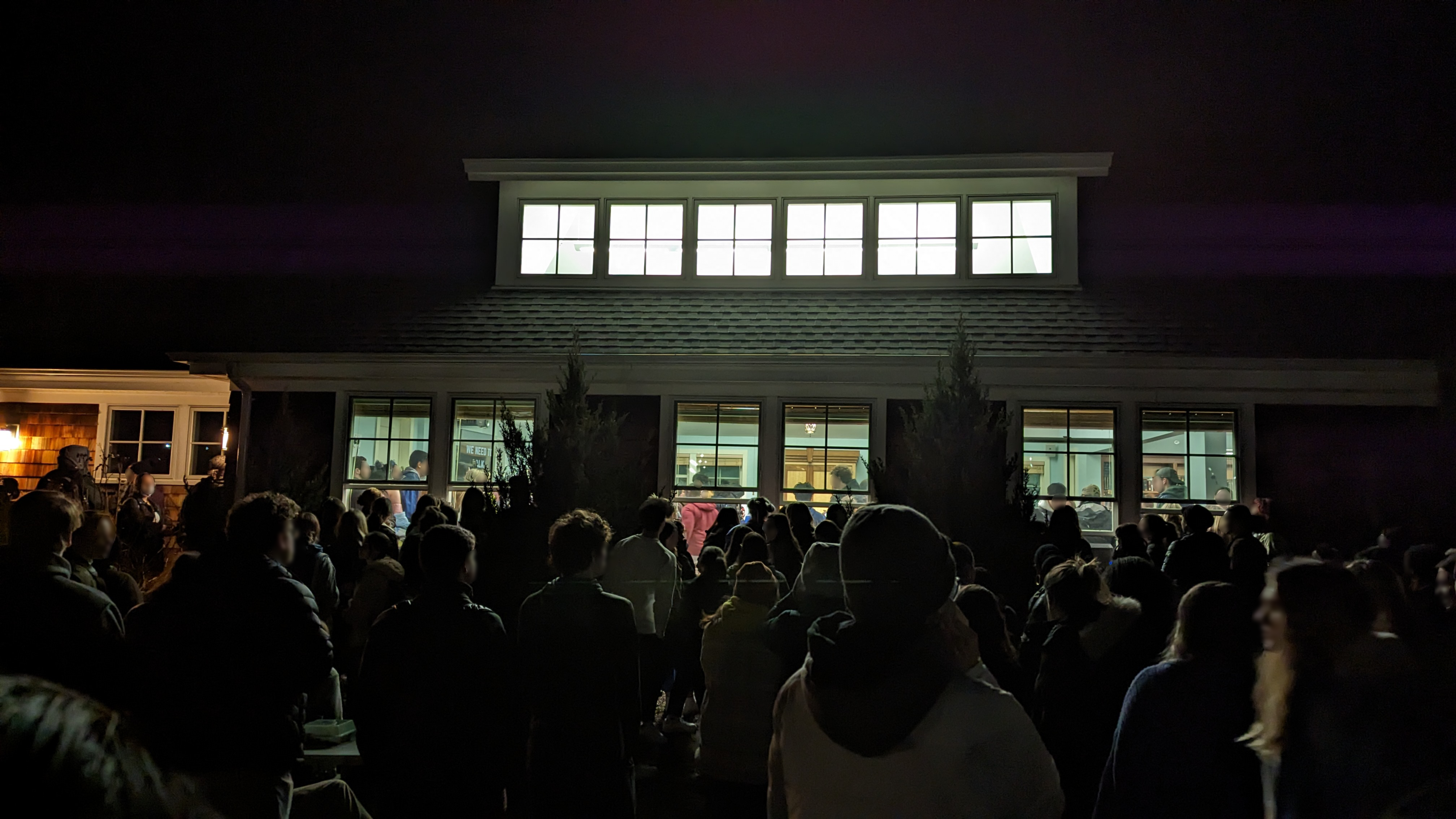
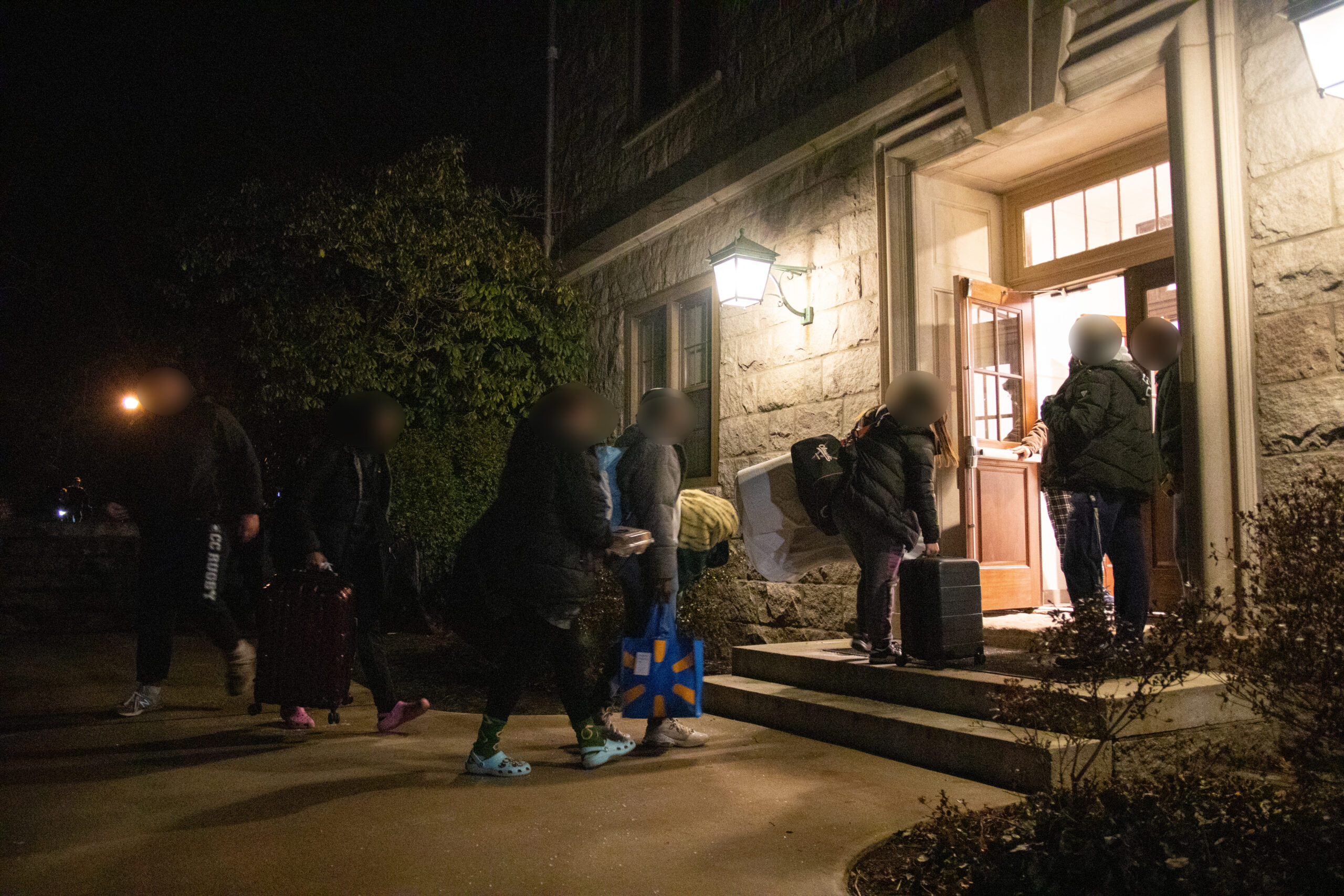
Following several years of student unrest at Connecticut College, 1971 saw an increase in student activism as a time when the student body was “in theory, about 90 percent anti-institutional” (President Shain, in his 1968 alumni newsletter titled “New Directions”). The first of the two infamous Fanning Takeovers, which took place on May 5, 1971, was the culmination of a campaign known as “The Spirit of ’71.” Started in 1968, this campaign was led by the 20 or so black students at the time, who called for 71 minority students and a full-time black administrator by 1971. President Shain responded quickly to the occupation, acknowledging the students demands that morning and publishing a statement the very next day, saying that “sometimes it takes something like this to get things moving” (The Day, 5/6/71). As the college administration worked to meet these demands, student Jay B. Levin went straight to the top, and wrote a letter to the Board of Trustees proposing the creation of a Commission to Investigate Racial Relations at the College which would be composed of administrators, faculty, trustees, and black and white students. The Trustees wre in support of the creation of this Commission, which first met in September of ’71, and found themselves confronting the following letter, submitted to the Commission by an anonymous alumna/alumnus.
I urge you to ask yourself, 44 years later, has anything changed? What can we learn from the student activists of our past?
“To the members of The Commission: (Aug 24 1971)
I must honestly say that I can only view my actual experience at Conn as a negative one, for the most part. The only truly positive aspect were the friends I made among the other black students.
My specific educational experience was good in that I did acquire and perfect some of the written reading and verbal skills necessary for the study of law, which I plan to go into. I enjoyed many of my major studies, for the most part. And a few of the other course I took. I was very grateful for the course exchange with Wesleyan because it opened a wider field of courses to choose from.
I was not close with any of the faculty. I did not feel comfortable with anyone. Neither did I feel that I was appreciated as a person- a human being. I found that the people at C.C., both faculty and students, tend to regard black people as specimens to be studied, dissected, and sewn up again. My role was that of a teacher- my subject- what is it like to be black, and why are black people so angry? I was asked to explain blackness, pat the “good” whites on the back, and give them eternal immunity from black anger and rage. The requests were subtle, but real, nevertheless.
At the other extreme was out and out prejudice, on the part of faculty, students, and employees of Conn. This was the worst welcome, because it is the worst blatant and easiest to deal with.
In the middle was the liberal white, who said – “You’re no different from me- all people are the same- I never look at color, only character.” And they then proceeded to strip me of my blackness, take away the uniqueness of my culture and then tried to remold me so that I would really be just like them–W.A.S.P. Something that can never be. And, were it possible to change, I would not– even if my life depended on it.
My four years at Conn were a continuous struggle to maintain and strengthen my identity and self respect and pride as a black woman. I fought and searched constantly for those aspects of my formal education which were most relevant to me as a black woman whose task it is to build a strong viable black nation across this continent and around the world. I worked hard to preserve my culture, to learn more about my heritage [most of which I did on my own because there is very little on the African and American Indian heritage of black people offered at Conn], and to shape a philosophy by which to guide my life so that I might make the greatest contribution I can to the building of an everlasting black nation. Yes, it was positive only in thatI know more about white people and their prejudices and their values. And I am strong in my bride and identity as a black woman. I know now, thanks to Conn an d1 year’s experience in the working world, what I must do to attain my individual goals, and to realize the dreams of my people. But the Conn experience is unnecessarily cruel and hard. I would not and do not recommend other black students to apply there. What I gain from Conn can be gained elsewhere, at less cost. I paid too dearly psychologically for the positive things I gleaned from Conn– academically and otherwise. Black people suffer enough in their day to day struggle to survive. The C.C. experience is 4 years of unnecessary suffering.” •