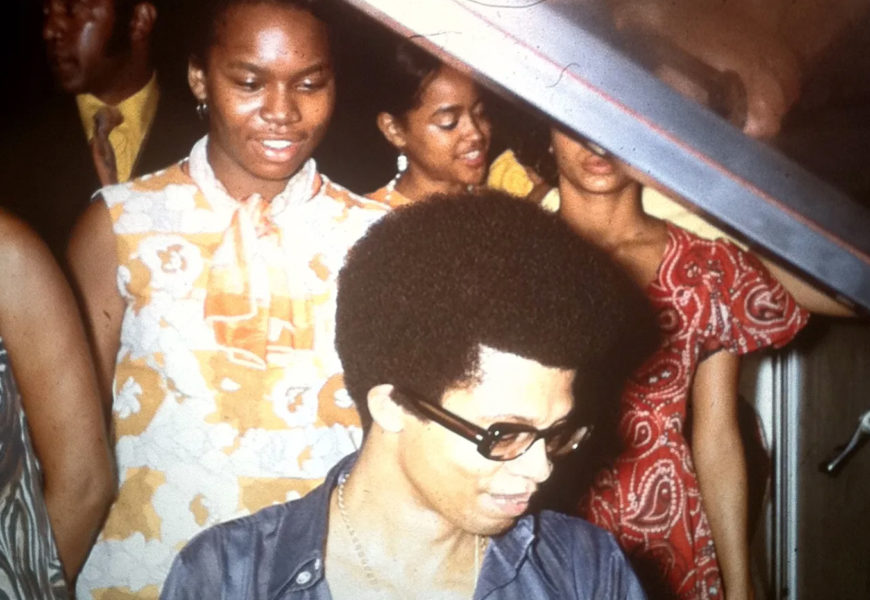
An Afro-American Society party in 1971. Photo courtesy of Linda Lear Center.
People of Color (POC) on Connecticut College’s campus don’t need any more student organizations. We have discussed our issues, we have connected, and we have created a community within ourselves. All we need now is for everyone else to enter the group chat. The current structure of inclusion attempts to offer solace to POC with the least amount of disruption to white existence. The problem with this is that it forces the aggressed to change, ‘be stronger’, ‘care less’, ‘live with it’ and imposes nothing on the aggressor. That sounds a little like a racist system, right? So here’s what you can do to change that.
Admit privilege and insensitivity
Whiteness in our world is invincible and invisible. It gives the lucky a passport to simply exist, allowing one the opportunity to be perceived relative to the significance of any one individual on this planet. These privileges are bestowed upon white people because whiteness is seen as superior and the norm. As you can imagine, these niceties are not extended to non-white people. Our presence in a room draws attention. Our actions warrant extra scrutiny. Usually, this puts us in a lose-lose situation where we simultaneously attempt to diffuse attention from ourselves while also highlighting our competence. In this struggle to balance these two realities, we have to also deal with microaggressions and ignorance.
Imagine this. “You wake up 10 minutes before your class begins. Like a superstar, you get ready in 5 minutes and are out of your room running to Fanning—you live in Lambdin by the way. On the way, most white people you pass expect you to move out of the sidewalk, so you’re basically walking on the dirt. Your new Nike kicks are ruined. You get to class, and the Professor asks you to group in threes. You are the only POC in the class, already feel out of place and now have to awkwardly scan the room and make eye contact to gauge who might need a third person in their group. The Professor gives every group 10 minutes to come up with a solution to a problem. You’re excited and think you have great suggestions but weirdly every suggestion you make is met with at best a “Yeah!”, while your other group members’ suggestions are discussed and developed further. This happens all the time but every time it happens it feels coincidental. They obviously don’t mean to dismiss me! Every time it happens it ends up taking over your day. Your mind is conflicted. Should I be angry? They are good people. Why would they want to make me uncomfortable? Should I tell them? I mean, it’s such a small thing. Should I report this? Your mood is ruined. You have two more classes and in your last class the Professor asks you to speak on another case of police brutality you haven’t heard of yet. Somehow they always expect me to know everything happening to my race. It’s too much! The day couldn’t get worse than it is.”
Tell any POC on campus this short story and they will turn it into a book. The truth is that white people on campus may not realize the impact of their actions, they may not even realize the actions themselves. As a white person, you probably have contributed to a POC feeling out of place on this campus and you probably will continue to. The first step is to admit and believe this.
Register for that race class!
There is blatant racism, and then there is covert racism and its microaggressions. Microaggressions are the kind of racism that the aggressor does not notice and that makes the aggressed feel queasy and confused—the kind that lingers in the psyche the longest. This is also the most common racism on a campus like ours. When a person is blatantly racist, one knows their exact intentions and can use Grandma’s advice on how to deal with a racist person. We cannot do the same for microaggressions because we are rarely sure of the intentions. We also cannot report these instances because they seem too trivial to persecute. How could I report that you always make me walk on the dirt? This means that these experiences pile up in our minds and eventually create the guarded and unapproachable persona that a lot of POC display to deal with a general feeling of not belonging.
To reduce the occurrence of these small situations that end up having an enormous impact on the college experience of POC, white people need to better understand the experiences of POC. This means taking a class that focuses on race and identity, a class that teaches the history that POC carry on their shoulders and which explains the vigilance in our approach in interacting with non-POC. Hopefully, after engaging with academic theories and historical narratives on race, white people will be more cautious in their interactions with POC, and microaggressions will be significantly reduced.
Engage with POC
The best way to understand the experiences of POC and become aware of the actions that push POC to the perimeter of the Conn community is to personally engage with POC. POC have plenty of Student Organizations that welcome everyone and create events with a focus on sharing our experiences and different cultures. An important step in being an ally is purposely putting yourself in the uncomfortable position of being with the community you have wronged, working to gain their trust and understanding their plight so that you can influence the necessary institutional changes that only you, who holds the power, can influence.
To take it a step further, go out of your way to engage in these kinds of conversations with POC. Who knows, you might just end up making a friend (that is, if they’re not your friends already). Most of us are open to having the race conversation as long as there is acknowledgment of privilege and ignorance and there is a genuine desire to understand and influence change. You could walk up to a POC and say, “Hi, I’m ____. I read a piece in The College Voice on how to improve racial inclusivity on campus and it suggested having a conversation with a POC on their campus experience. Would you like to talk over coffee in Ruane’s Den?” She might say no but at least you tried, right?
Now you know what you personally can do. Here’s what we can get the administration to do: With our united voice, we could make taking a social inclusion course on campus compulsory. Don’t worry, it does not have to be a race class. There are plenty of minority communities on campus including but not limited to the LGBTQIA+ community, international students, persons living with disabilities, and womxn. Thank me later when they reduce the GPA-killing language requirement to one semester because now they’re investing in your woke development. •