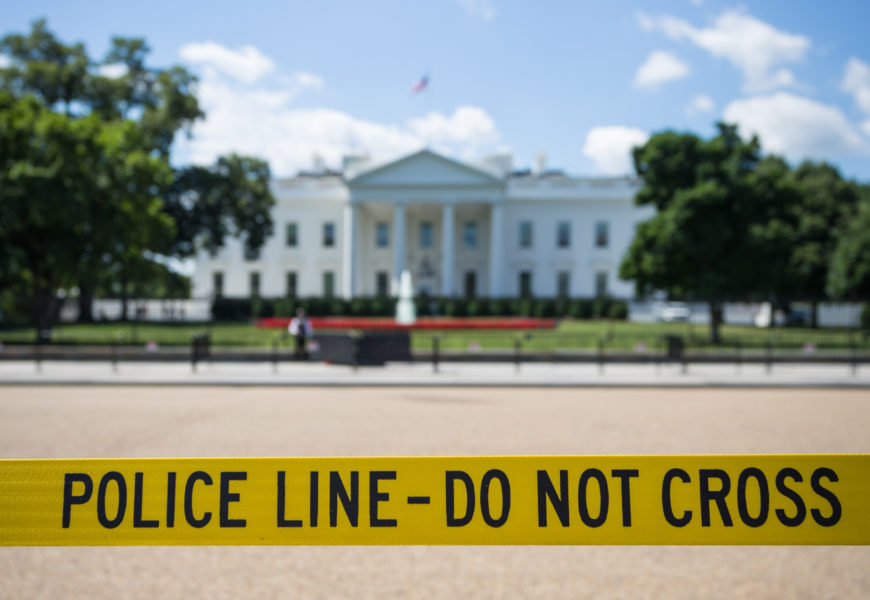
An article written in The Guardian asked, “Where is the steel?” Nearly 8,700 miles away from the White House, a young Prime Minister comforted her country, and by extension, the world, as it grappled with the Christchurch shooting. New Zealand Prime Minister Jacinda Ardern became an international symbol of courage overnight as she stood unwavering in the face of immense grief. She showed steel and courage. As the United States enters rarefied air with a newly opened impeachment inquiry, some individuals within our country’s borders want to show the world what we’re made of.
What Speaker of the House Nancy Pelosi actually said was, “Mr. President, you have come into my wheelhouse.” She might as well have replaced that with a quick “welcome to hell” when she announced a formal impeachment inquiry into the President of the United States and his accused pressuring of Ukraine to dig up dirt on Joe Biden and his son Hunter. President Trump may not realize it, but Nancy Pelosi and her Democrats have changed the game for the next 12 months.
Only two presidents in our nation’s long history have reached the tipping point of “treason, bribery, or other high crimes and misdemeanors.” Neither was removed from office, and few believe that that won’t change this time. It is a one-sided issue, and yet, the President is out of his depth and he’s floundering. On a daily basis, he rails against the inquiry. Gone are the days where Trump’s Twitter could reorient the news cycle. He no longer controls the narrative.
The way it works is like this: Each of the six committees in the House of Representatives will continue separate investigations into the President. Their strongest cases will then be sent to the House Judiciary Committee. If the findings are found to be significant, then the entire House votes on whether or not to impeach the President. If they get the necessary 218 votes, the President is impeached and the articles of impeachment move to the Senate where he is put on trial. Two-thirds of the Senate must vote to convict for him to be removed from office. Speaker Pelosi would not have moved forward with the proceedings without the 218 votes, but she and other Democrats know that removing the President is near impossible.
There are some Democrats in the Speaker’s cohort who are more dead-set on seeing the President impeached than others. That being said, House Judiciary Committee chairman Jerry Nadler has taken a backseat to the more moderate Adam Schiff who chairs the House Intelligence Committee. Schiff’s methodical approach lends more legitimacy to the inquiry than Nadler’s more persistent and aggressive style.
Speaker Pelosi believes that the path to our country’s restoration lies not in Democrats retaking the White House or the Senate, or keeping the House of Representatives. We are past all that now, she says. It is, instead, a moral responsibility to impeach the President. In an interview with the Texas Tribune CEO Evan Smith, she said, “People say you have to take a political risk doing that. That doesn’t matter.”
Unfortunately, given the political climate, impeachment is a highly partisan issue. Democrats will build their case against the President and Republicans will resist. That much seems as inevitable as anything. According to a recent Gallup poll, only 6% of Republicans nationally think the President should be impeached. In a recent House vote on the rules of impeachment, 194 of the 197 House Republicans voted “no.” The three outliers did not vote. Former GOP member Justin Amash, who is now an independent, voted with Democrats. Nate Silver’s FiveThirtyEight polling website released an article covering what it describes as the plethora of anti-Trump Republicans, saying, “you just have to know where to look.” Those who appear anti-Trump include members of the media like Fox’s Shepard Smith who recently resigned, members of Congress like Will Hurd (R-TX), conservative institutions like the Cato Institute, and even former cabinet members like former Secretary of State Rex Tillerson. So, maybe Democrats stand a better chance of removing the President than many of the pundits think.
A willingness to break from one’s party is all it takes, says Republican consultant Mike Murphy. He wrote that if given the chance to vote anonymously, up to 30 Republican senators would vote to remove the President. The number is impossible to prove, but he makes an interesting argument that some political commentators think should be adopted: an anonymous vote. A 1999 Harvard Crimson article regarding the impeachment inquiry into Bill Clinton acknowledges that anonymous votes are hardly unprecedented, even in the United States. Murphy wants the GOP to take a stand, writing, “It is a time for clarity, no matter the cost.”
If the President is impeached, which is likely, he will almost certainly remain in office, but with a cloud over his head. As impeachment hearings begin, witnesses will testify to the best of their knowledge and Congress will hopefully perform their Constitutional duty with that information. The 2020 election will come and the American people will speak. But much of this is too early in the process to predict what will happen during elections. All we know now is that President Trump’s time in office, however long that may be, will never be the same. •