
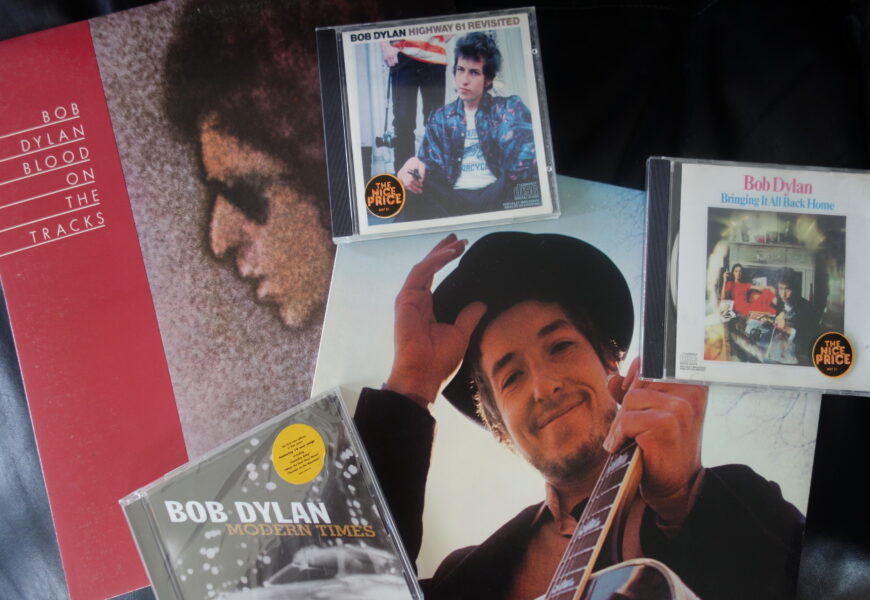
Photo courtesy of Elizabeth Berry.
If you are looking for a new and innovative way to spend your quarantine, you may want to peruse the neverending Wikipedia page on Bob Dylan. Or, if you are feeling particularly motivated, listen to his new 17-minute song: “Murder Most Foul.”
Speculated to be part of Dylan’s most recent 2012 album Tempest, the song is primarily a meditation on JFK’s assassination in 1963. But even a first listen reveals other themes at play. While the somber piano in the background sways the listener to sleep, the steady rhythm allows the audience to focus on the lyrics. I will warn you though: when you think you have reached the last stanza, you will check the time and realize that it’s only been 10 minutes and 52 seconds. Only.
At first, it may seem that our friend Bob is delivering a history lesson in his version of Hank Green’s Crash Course —although at a slower pace. And I will be honest that this conversational style is not my favorite version of Dylan; it’s more talk-y, less sing-y. On a first listen I hear notes of past songs, especially “Desolation Row”—another long work of Dylan’s. Even his tone remains the same, at least compared to his most recent work as in Tempest. I prefer Dylan’s earlier phases—Blood on the Tracks has been a particular go-to when I get in the car to drive nowhere. But preferences aside, “Murder Most Foul” is an epic which reminds us of the sheer talent in a singular body and the power of music to help us mortals during times of struggle and hardship…to quote a phrase.
I shall now begin my English major-style analysis of the song, but this is a disclaimer that a) I cannot cover the entire song in a single article b) I will definitely miss references and musical theory elements, please forgive me, and, c) my thoughts are my thoughts and not the only interpretation out there. That is what makes Dylan’s poetry so enamoring—it can take on a new meaning for each person, each listen.
As previously stated, Dylan begins the song describing the assassination of America’s beloved president on “a dark day in Dallas, November ‘63,” when Lee Harvey Oswald “blew off his head while he was still in the car.” The first two stanzas set the scene, but from there Dylan goes on several unconnected tangents. He also throws in various oxymorons such as “good day to be livin’ and a good day to die,” and “thousands were watching, no one saw a thing.” Both these phrases indicate that “Murder Most Foul” is not just talking about the death of JFK, but also the deaths of thousands of people that are reported every week because of the coronavirus outbreak. JFK’s death becomes a symbol for America’s soul which the nation is still searching for: “I said the soul of a nation been torn away / And it’s beginning to go into a slow decay.” If the U.S. lost its soul over fifty years ago, it seems almost irretrievable given the current circumstances.
Throughout the song, Dylan makes reference to various artists and celebrities including Wolfman Jack, Billy Joel, the Eagles, and Marilyn Monroe. The reference that meant most to me—as I am your basic fake classic rock fan—is: “Hush, little children, you’ll understand / The Beatles are comin’, they’re gonna hold your hand.” I challenge everyone reading this now to put on “Twist and Shout” and dance around your room. If you don’t feel slightly better after, I will buy you mozzarella sticks from Cro when we are back on campus.
Not only does Dylan talk about an assassination that still haunts the Nation, but also deeper issues which continue to remain entrenched in our society. Lyrics including “blackface singer, whiteface clown” and “Up in the red light district, they’ve got cop on the beat / Living in a nightmare on Elm Street” signify the racial tensions and inequality present in the sixties and still present now. “Murder Most Foul” is not the first song Dylan has sung about injustice —see “The Lonesome Death of Hattie Carroll.”
These injustices retain relevance in the current pandemic we are living through. Simon Vozick-Levinson writes in his Rolling Stone article “Murder Most Foul’ Is the Bob Dylan Song We Need Right Now” that the song “is really about the ways that music can comfort us in times of national trauma. When everything in the world seems wrong, a favorite song can be the only thing that makes sense.”
In the Vulture article “Bob Dylan’s New JFK Assination Epic Couldn’t Be More Prescient,” Craig Jenkins explains that the nation is now huddling around the radio as they had decades ago, begging for someone to say that what they are hearing is a dream. Music has the power to shift your mood and transport you to a different reality where you can imagine dancing and belting the lyrics to our favorite tunes.
The song ends with Dylan ironically singing: “Play ‘Murder Most Foul.’” I suggest you do. What else do you have to do anyway? •






Hurricane fits into social injustice as well.
I think Dylan is spot on with respect to the insensitivity that many American feel about racism in our country. The me for me’s sake is dividing us. We need to be pulling together and doing the right thing to help deliver our nation from the paranoia that has gripped us . Let the truths come out, cause time heals most wounds. Our nation needs a reality check, for sure.
Oxford Town, only a pawn in their game can be included in this catehiry
typo,category
Thanks very much for this piece!
I started following BD with ‘Blood on the Tracks’. I am about 20 years younger, which at the time was an age. Now of course the gap is less significant. To go back and discover the albums in order from 1961, to ‘catch-up’ was more than an education, it was a revelation, as great song succeeded another. I would advise all prospective ‘followers’ to start at the start. Scorsese does that in his film up to Highway 61, and rightly so. To me, this is a wonderful song: moving, utterly relevant, beautifully articulated; in fact articulation has always been his strong point. All the great songs are very precisely ‘said’. It’s rare you cannot hear the words. Unlike most popular musicians, he has nothing to be ashamed of lyrically! And nothing to hide. I like the article. The things that strike me most here are the hypnotic quality of the music and voice – it’s incredibly difficult to sing like that and is the result of a lifetime’s work; and then, the vividness and memorable-ness of some the rhymed images, especially once the scene-setting phase is complete. That matters though as, structurally, you are disarmed by the apparent literality of the set-up and then become engrossed in the manner of the lyrical crescendo: the tumbled-out ‘apparently’ off-the-cuff listing of songs and fragments all linked by the bitter narrative of the ‘actuality’ of the event. Sorry for rambling but your article prompted me. I hardly ever post anything and felt I had to say something somewhere! All the best!
Nice try mockingbird. Bob’s song does not state that Oswald “blew off his head while he was still in the car.” It does however in several stanzas point to a conspiracy. Your English major-style analysis merits an F.
Nothing fires the synapses in an older person like hearing music listened to when we were young. Everyone believes their generation is unique, but unless you came of age in the 1960s, you have no idea what it was like. The assassination was one shirt chapter in that decade. Dylan has wrapped a masterpiece around that singular event.
Martin Luther King famously said, “A voice like Mahalia Jackson’s came around only once in milennium”.
The same could be said of Dylan’s poetry. Those who criticized his award of the Nobel Prize for literature should now apologize. When it comes to literature, psychology, philosophy, and religion, he has done his homework.
Good summation.
Dylan has influenced the most of my life. One more time this song along with “I contain moltitudes” has enlightened these terrific days.
Kennedy is “beloved” precisely because he was assassinated. Had he lived, he would have been remembered much like Reagan, the other 20th century president he most resembled. Who is way more beloved than he should be, in my opinion, but at least there is a sizable portion of the population who grasps how awful Reagan was, in contrast to Kennedy who exists as myth, and not who he really was, in the American popular imagination. I’ve been holding off on listening to the song. Dylan was there, has he also replaced lived reality with mythmaking?
Matt, that is undoubtedly true to some degree. However, for some it is tragic for what JFK represented and what might have been. JFK challenged the growing power of the national security state and military, promising to splinter the CIA into a thousand pieces. Historians have finally begun to acknowledge that JFK had firm plans to withdrawal all advisors from Vietnam and not get involved in a war there. These plans were formalized by the classified NSAM 263 (or 273?), but could not be made public until he was reelected due to obvious political reasons. He opposed his Joint Chiefs, several of whom advocated an invasion of Cuba, and unbelievable as it may be, a few urged a first strike nuclear attack on the Soviets. The American University speech that led to a nuclear test ban treaty with the Soviets was radical at the time. JFK passed legislation that enraged the oil companies by taking away a major tax break. He went as far as politically possible at that time on civil rights, etc…all in less than 3 years. Contrary to the writer’s statement (forgiveable given 55 years of cover-up by the government, greatly aided by the mainstream media), the honest research proves that Oswald did not fire a shot, and that Kennedy was killed by very powerful forces, and in effect was the victim of a soft coup de’etat. The assassination of JFK was a seminal event in our history, and Dylan clearly understands this.
Reagan resembles Kennedy like the Sahara resembles Niagra Falls.
I loved the song, Bob sang of Emmit Till and Medgar Evers ,much like his hero Woody Guthrie he always stands up for what’s right, yesterday I listened to Dylan like most day’s, especially Isis because they married on the 5th Day of May!
Nice try mockingbird. Bob’s song does not state that Oswald “blew off his head while he was still in the car.” It does however in several stanzas point to a conspiracy. Your English major-style analysis merits an F.
I took a listen and just found myself smiling and being drawn back to a flood of memories of the past.
JFK ( it was BIG news ) Marilyn Monroe, ( cant think of John without thinking of Marilyn) the songs, the artists. To me ( and we all have our own opinion) I picture him just sitting back in an overstuffed chair with his guitar on his lap and just piecing together ramblings of his past, in the genius way that he is gifted to do…in rhyme.
Dylan’s Social commentary is never been sharper. Hidden in the meanderings of the storyteller, throwing shade with his own personal class of revisionist history 101, I’m reminded That he not busy being born is busy dying. One lesson Bob showed me is the golden rule. You know: he who has the gold makes the rules. —Alibaba visiting Cameron and Marley up in LA
typo,category
I believe that it is not racism he is focused upon, but the threat to another great President Trump today from the same type if not identical forces that overturned the electorate and committed a coup. Trump is going after the injustices, the corruption, the Communism, the Federal Reserve, the WTO, WHO, UN, all the clubs of tyranny and enslavement. We don’t need any Beatles to hold our hand, we just gotta make a stand, against this socialism Communist move that would destroy and kill and steal all that is good.
… Yes, thanks very much, but I’m sure you’d be the first to admit you’re only at the scratching-the-surface stage in your Dylanology career…. 💐
I’m a die hard Dylan fan. And I like the song but I feel there are too many obvious references and oxymorons that are not in line with Dylan’s traditional witty lyrics. This is not Desolation Row for sure. Hey it is not even as good lyrics-wise as a rather obscure Dylan song like “Dignity”!!
As I heard this song for the first time, I felt like Bob was telling me my living experience on that day. I was in 7th grade in California. He spoke about every thing that was happening around me and I was actually reliving it again. My thoughts were running rapid as the video in my head played the rerun my brain had stored, including things I had somewhat forgotten or placed in archives. To me, this is his greatest masterpiece to date.