Photo Courtesy of Unsplash.
The COVID-19 pandemic has forced professors and students to rethink how to teach and learn in a completely new format. These adjustments have taken a toll on neurotypical and able-bodied students and teachers alike, but is online learning even more difficult for neurodivergent and disabled students? “Neurodivergent” students have brains and/or bodies that do not function in the way that society deems acceptable and standard. “Disabled” students have a physical and/or mental condition that limits their movements, senses or activities. Neurodivergence and disability are not inherently “bad”, but they can make life difficult for individuals living in a world not designed for them. As someone diagnosed with ADHDand chronic migraines, I have some insight into the physical and mental effects online learning has on neurodivergent and disabled people. With that said, I am not speaking on behalf of the neurodivergent and disabled communities, nor any other individual with ADHD or chronic pain. All of the groups I have mentioned thus far encompass an incredibly diverse range of brains and bodies, and each have unique experiences.
For something to be considered ableist, it needs to cause distinct disadvantage to one or many groups of disabled and neurodivergent people. Online learning is hard for all of us, but for some of us, the way our bodies and brains function disproportionately adds to the stress and inaccessibility of this format: so is Zoom learning ableist? Absolutely. So is a traditional learning environment.
Most of the ways we “do” education in the United States are intrinsically ableist. The United States was built by capitalist white cisgender straight(ish) Christian men, for other capitalist white cisgender straight Christian men, and the oppressive institutions created by these men still impact American politics, policy, culture and consciousness. Just as racism and sexism are ingrained in American institutions, so too is ableism. The only reason we call people “disabled” is because their body and/or brain are unable to succeed, or at least succeed with comfort, in the world they live in. Since American society is dominated by capitalism, one’s worth is measured by their potential for productivity. A body or brain that is incapable of continuous labor, or that cannot produce consistently, or does not behave efficiently is not useful to capitalists, so such bodies and minds have been deemed less worthy. Accommodating disabled and neurodivergent people is often not very difficult, but it is also not always cost effective. In order to hold onto the money it would take to accomodate disabled and neurodivergent people, institutions continue the narrative of unworthiness, and pity without action. Ableism permeates culture and experience so aggressively, but insidiously, that even those who are disabled or neurodivergent often don’t see all the ways they are disadvantaged. One of the reasons detecting this ingrained ableism is so difficult is because the historical record has been wiped of neurodivergent and disabled people. Your different brain either made you a unique genius, or sent you to the periphery of the community in prisons, hospitals, or asylums. Your different body was a curiosity to others, or secret shame that you did everything you could to hide. Nowhere in mainstream history do we see someone suffering with disability or neurodivergence question why the system that is so hard for them to exist in was created the way it was. Our world was constructed to exclude the disabled, we just fail to see that the system, not the people, are the issue. In a world focused on profit, a body that cannot be exploited is not useful, and a brain that cannot conform is problematic.
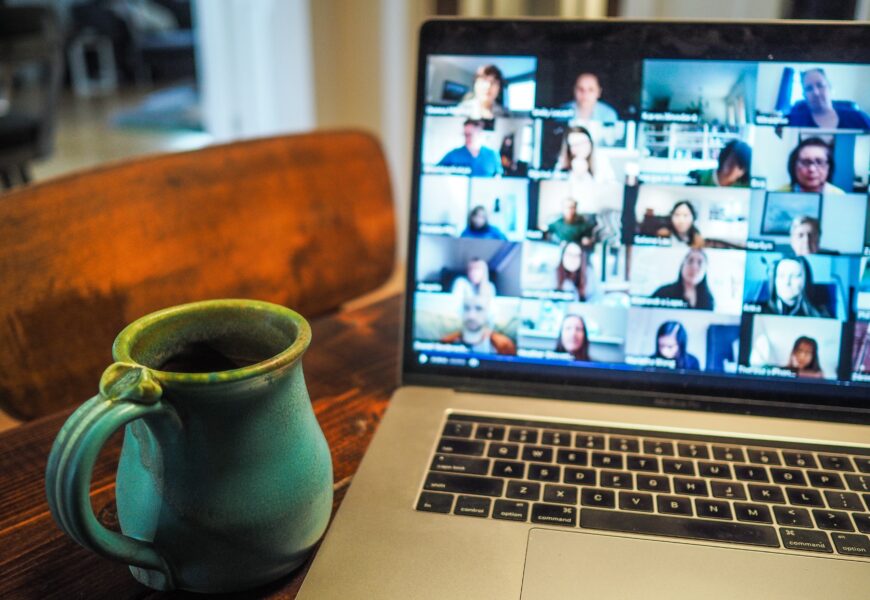
Online learning presents all sorts of new challenges. Sitting still at a computer and paying attention for extended periods of time is not only grueling for my ADHD brain, it is also exhausting for my eyes, which will trigger a migraine. Perhaps I am at a particular disadvantage because the extra focus I need to put into online learning to counteract my ADHD creates the triggers for my migraines, though I would posit that anyone with a learning or visual disability also struggles with the extended screen time. Some class formats have shifted in a difficult way, too. The increase in lecture classes has decreased my learning capability because class participation is usually one of my key strategies for staying focused.
However, there are also some benefits to Zoom. The subtitles function for those of us with auditory based issues, asynchronous lectures that those of us with learning disabilities can pause, rewind, slow down or speed up, and the ability to turn the camera off for those of us with mood disorders, for example, are life savers we don’t have in traditional schooling. Before Zoom, whenever I had a migraine I would need to miss class, take my medicines, and lie down in a quiet, dark room. Online learning allows me to follow my treatment plan while attending class with my volume low and my camera off. This ability keeps more kids learning that otherwise would’ve missed class—and not just those of us who are neurodivergent and disabled, but for anyone going through a bout of depression, or a tiring injury. This feature alone makes me wonder if I might actually prefer Zoom learning because it’s more accessible for me than the traditional classroom. As educators and the general public begin to understand this, truly life-changing adjustments are made and we begin the crawl to systems that work for everyone. This necessary improvement has far reaching intersectional effects. If COVID-19 has accomplished anything even remotely positive, it has revealed flaws in our systems that the more powerful or blissfully ignorant did not see before, or can no longer ignore.