
Courtesy of Elaine Sandoval Carrasco ’28
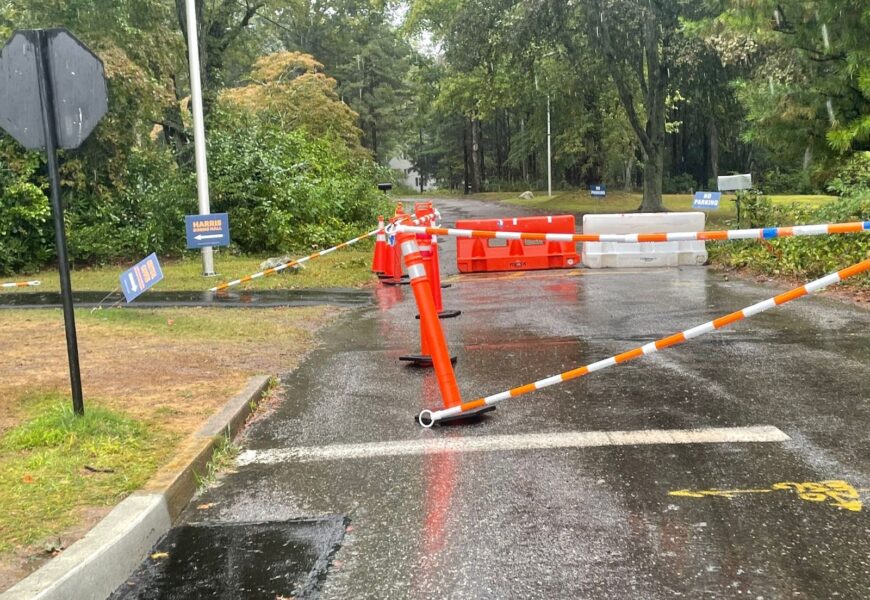
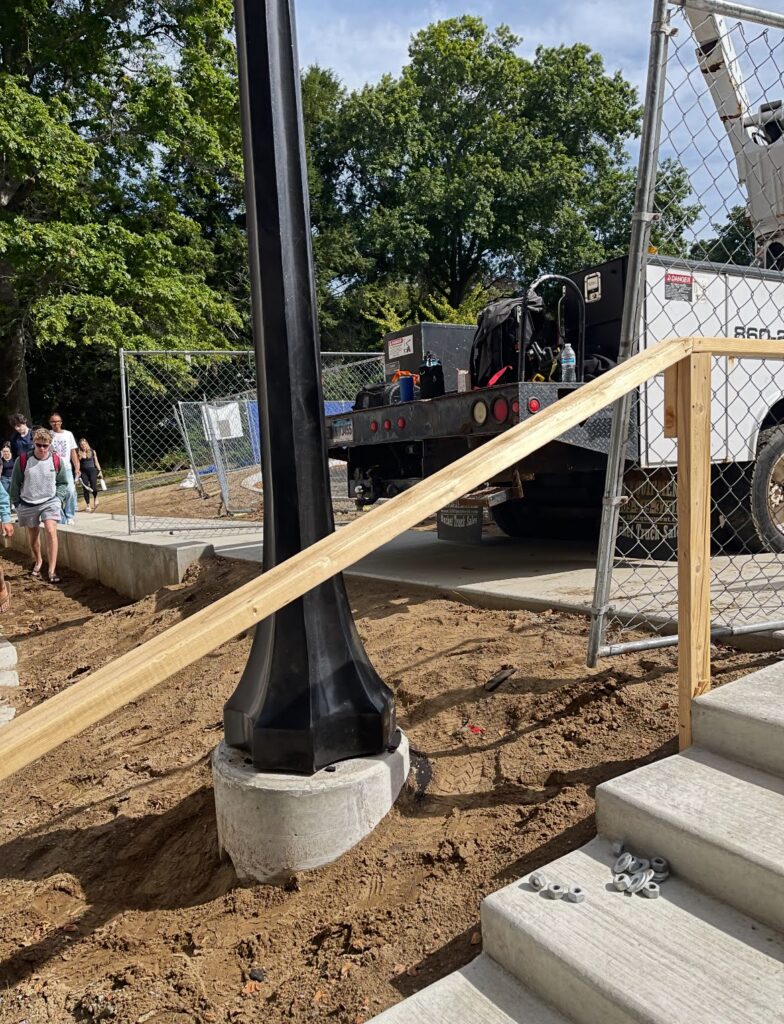
Disabled students at Connecticut College are raising alarms after construction outside Harris Refectory and the Plex has cut off the most direct paths into the building. Harris, the College’s main dining hall, and the North Complex, known by students as the Plex, share one structure and serve hundreds of students each day. The Plex has long been considered the school’s most accessible residential hub. Now, fencing, loose gravel, dust, and sharply graded temporary sidewalks are making entry difficult, forcing some students into detours that they describe as unsafe, exhausting, and unequal.
Email correspondence reviewed for this column shows students documenting falls, injuries, and fatigue on the routes set up to bypass the heavy machinery outside Harris. Those unable to use stairs must choose between a temporary sidewalk not accessible to all students, with a slope “far above 4 percent” — too steep for many mobility devices — or a detour through the far‑north entrance at Park House that adds up to half a mile of extra walking. Both paths, students say, turn a basic trip to their dormitories or the dining hall they pay to access into a daily battle.
“This is my home and the dining hall where I pay to eat,” one student said. “Right now, if you can’t do stairs, your options are dangerous or exhausting.”
For students with limited mobility, “exhausting” has a measurable meaning. Studies by the National Institute on Disability, Independent Living, and Rehabilitation Research show that people with certain chronic conditions can expend up to three times more energy per step than non‑disabled peers. A detour of even 600 additional yards — roughly the Park House route — can represent an unsustainable physical toll repeated several times a day. For students with fatigue‑related disabilities, the cost can be attending fewer classes, skipping meals, or risking collapse.
The Americans with Disabilities Act sets clear standards for accessible routes: walkways generally cannot exceed a 5 percent grade, and ramps must not exceed 8.3 percent. Changes in elevation above half an inch require a beveled or ramped edge. Yet the Harris detours feature loose gravel, a sharp turn radius that wheelchairs cannot easily clear, a two‑inch lip between cut layers of pavement, and a grade visibly higher than 5 percent. By appearance and testimony, the “temporary sidewalk” fails to meet ADA guidance.
Experts emphasize that these shortcomings matter even if they are temporary. Institutions are required under the ADA to maintain equal access at all times. A substitute route that is longer, steeper, and more hazardous than the standard entrance does not satisfy that mandate.
“This isn’t only about physical inaccessibility,” said a disability consultant. “An inaccessible detour leads directly to academic inequity. If you spend 20 minutes more getting to class or dining, or you avoid campus spaces entirely, you are participating less fully in your education. Equal access means equal ability to live, study, and engage — not simply a path that technically exists but is unusable.”
Michelle A. Gallerani, Assistant Director and physical therapist who works with Connecticut College students with mobility disabilities, explained the stakes for the campus and broader community: “As a local physical therapist, I work with several Connecticut College students who live with mobility limitations due to a range of diagnoses. As a member of the Waterford–New London community, I also understand that community perception is important to the college,” Gallerani stated.
“On Wednesday, September 5, I reached out by email to the president, campus safety, and the dean of students to share concerns about campus accessibility during the current construction. I highlighted that the construction has restricted safe access to many required locations on campus, while the detours place additional physical and energy demands on students who already face daily challenges. To date, I have received only one response—from Campus Safety. I am disappointed not to have heard from either the president or the dean of students regarding these concerns. Based on my conversations with current students, I can also understand their frustration. For many, the lack of clear solutions during the first two weeks of classes has left them feeling that their needs have not been properly addressed. Moreover, the current state of construction leaves the campus without meeting ADA standards for accessibility, creating additional barriers for students who deserve equal access to their education.”
At the same time, the office meant to coordinate such accommodations is without leadership. Dr. Jill Heilman, director of Student Accessibility Services, has been on medical leave since August and is expected to return mid‑September. In her absence, interim responsibility has fallen to facilities staff and administrators, who have sent sympathetic emails but offered no immediate alternatives.
As a result, accidents have continued. Students report peers falling on the loose gravel, catching mobility aids on the broken pavement lip, and struggling on the steep incline. Others say they have missed meals at Harris or arrived late to classes multiple times since the semester began.
Courtesy of Elaine Sandoval Carrasco ’28
The frustration is amplified by cost. Students pay for campus meal plans and housing in the Plex but, for now, cannot reliably access either on equal footing with their peers.
Title II and Title III of the ADA apply to colleges that accept federal funding, requiring equal access to programs, services, and facilities. Renovations are not exempt; temporary pathways must themselves be accessible. Failing this, a college risks a civil rights complaint, investigation by the Department of Justice, or civil litigation.
“If a student is barred from housing or dining because of how detours are designed, that is a strong ADA claim,” said a student affected by this situation. “If someone is injured while navigating a slope or lip that doesn’t meet federal standards, the liability is even clearer. Both are preventable.”
The consequences could extend beyond legal fees. A lawsuit could bring costly retrofits, pressure from donors and accreditors, and reputational harm at a time when colleges compete fiercely to attract students who value inclusion.
Administrators emphasize that the construction is part of a long‑term transformation. In an August 23 campus‑wide message, Senior Associate Dean of Student Life, Victor Arcelus, described the project as “an exciting transformation that focuses on pedestrian safety, accessibility, new trees and plantings, and community connectivity.”
Justin Wolfradt, Executive Director of Facilities Management and Campus Planning, told students that the main Harris entrance is scheduled to reopen in mid‑September. Until then, he said, pedestrians should walk in a designated lane of the street around the fenced area and “please be alert for signs, pedestrian traffic, construction and vehicles.”
Yet between official optimism and on‑the‑ground experience lies a widening gap. Until the main entrance reopens, disabled students remain dependent on routes that neither meet ADA standards nor their daily needs.
For some, the distinction is clear: between a level sidewalk and a gravel incline lies the difference between autonomy and exclusion. The Plex once symbolized the College’s commitment to accessible housing. Today, students navigating Harris and North Complex face barriers that deny them participation in basic campus life.
The central question is immediate: can Connecticut College ensure that those who pay to live and eat at its core facilities have safe, equal access? Until it does, the risks — legal, physical, and reputational — continue to mount.






I am glad attention is being focused on this important issue. Students have been apologizing for arriving late or muddy to class or office hours due to skirting construction. Winthrop remains without accessible sidewalk connections to rest of campus and parking and there are no ramps or accessible entry points for this office, classroom, and lab building. It’s an issue for students and employees both.