Courtesy of Sierra Mayoral ’26
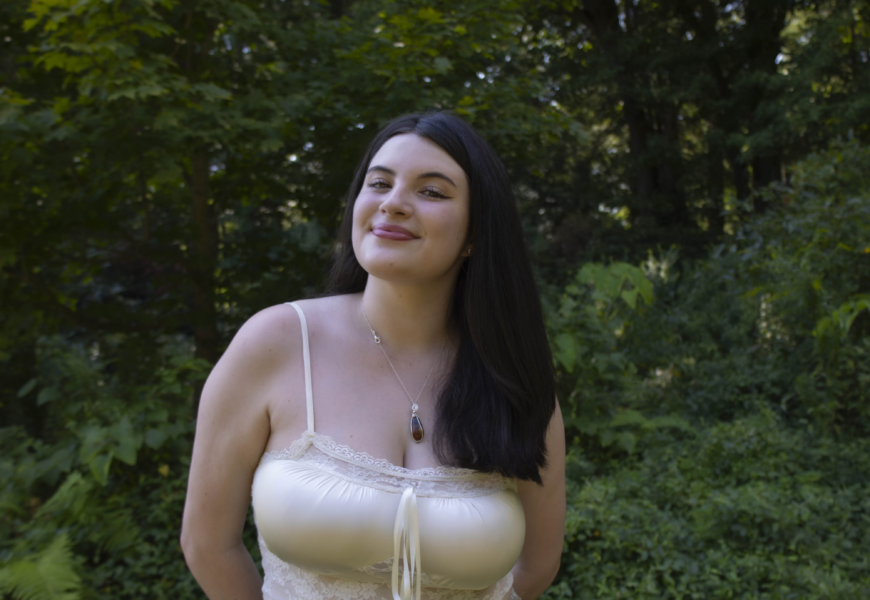
When senior Sierra Mayoral talks about her work, film and dance slip into the same sentence as naturally as breath. A double major in film studies and dance at Connecticut College, she has become one of the campus’s most compelling interdisciplinary artists, using movement and the camera to explore identity, memory, and community.
“I’ve been interested in film and dance since I was really little,” she explains. Growing up, she staged iMovie productions with friends and choreographed pieces for her sister, long before she had the language to call herself a director or a choreographer. “They were things that I sort of did as a hobby for a while, but then when I came to Conn I realized I wanted to do them more seriously.”
Mayoral arrived on campus already set on majoring in film, but dance was a surprise. “I wasn’t planning on majoring in dance at all,” she says. “But after taking a dance class, I realized that I really liked it.” That one course led to a second major and, more importantly, to an ongoing experiment in how to choreograph not just performers, but cameras, edits, and audiences. At Conn, she has found both departments eager to support her hybrid work, with faculty in film and dance equally invested in helping her think about movement, composition, and storytelling across media.
Right now, that support is most visible in her honors thesis: a dance film that sits at the center of her senior year. The project has pushed her to think beyond the stage. “I’m learning not just how to choreograph dancers, but also how to choreograph the cinematographer and choreograph with editing in mind,” she says. That mindset, she notes, is fundamentally different from making a piece meant only for live performance. A course in the dance department called “Media In Performance,” focused on mixing live performance with film, video, and other technologies, gave her tools to think about how bodies and images coexist, while film production classes grounded her in directing, working with crews, and translating a concept into a finished work.
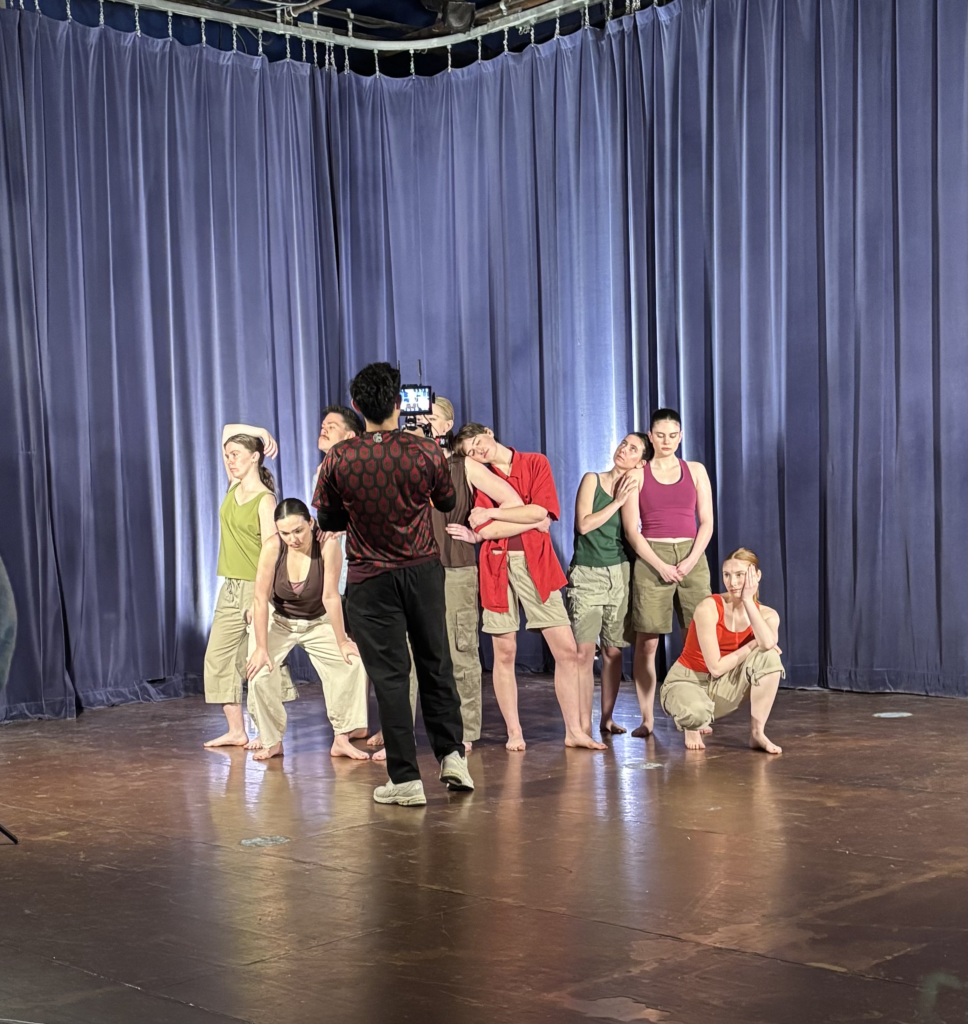
Mayoral’s honors thesis is what the dance world often calls a “screendance”: a work created specifically for the camera rather than a filmed version of a stage piece. Instead of a linear plot, the film is structured through a series of movement-based sections exploring her experience as a Mexican-American artist. “I have a section about tourism, specifically tourism in Latin America,” she explains. Another section dives into code-switching and how it is “held in the body,” tracing the physical textures of shifting language and context. She performs a solo that functions as a more personal exploration, and a duet with a friend and fellow dancer who is also Mexican-American becomes a shared celebration of identity. “Hopefully it’s an exploration through movement, but also a celebration of those identities,” she says. On a technical level, the film is also a challenge to herself: after years of making more traditional narrative projects with dialogue, she is now asking, “How do you tell a story on camera without words?”
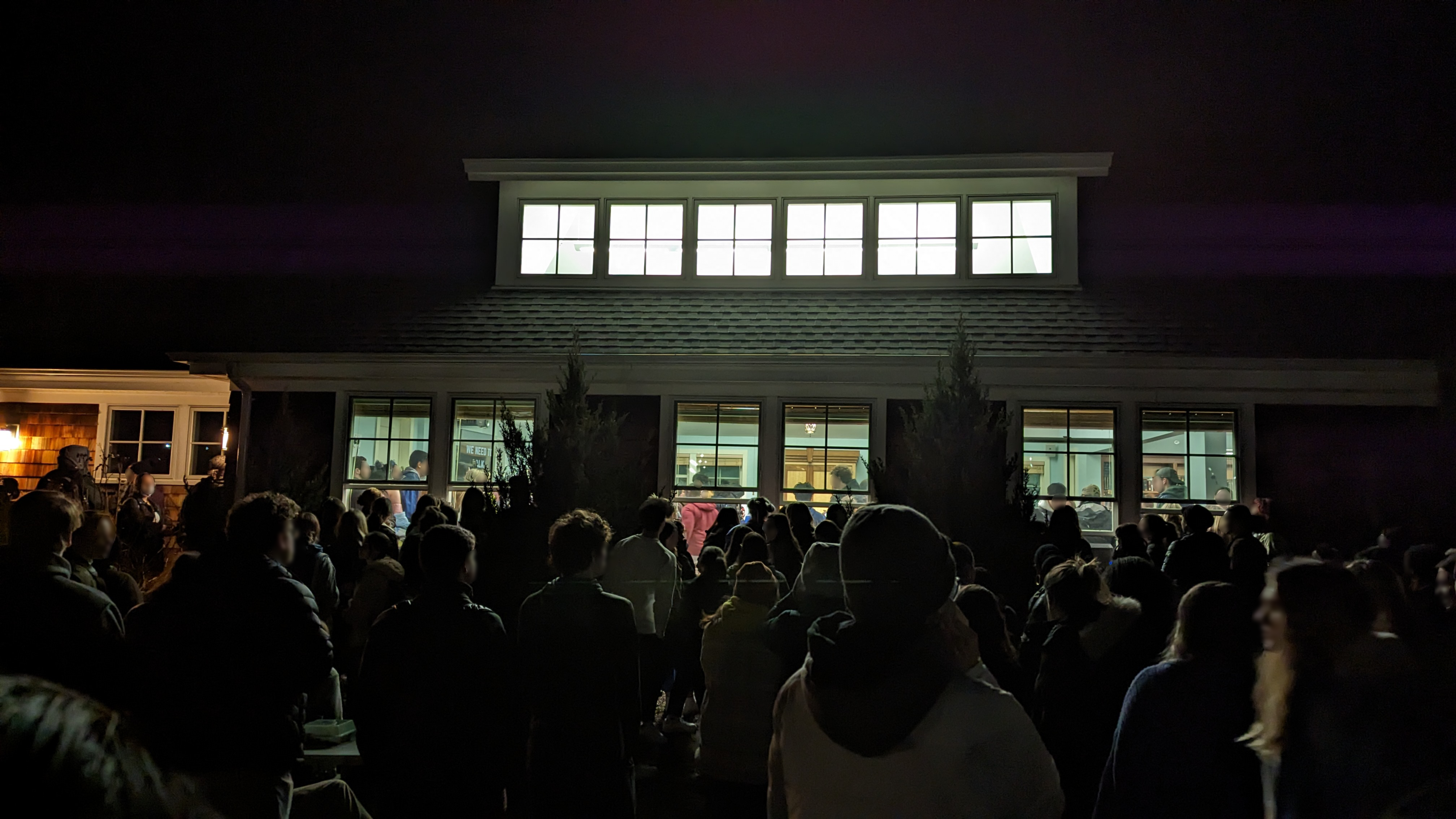
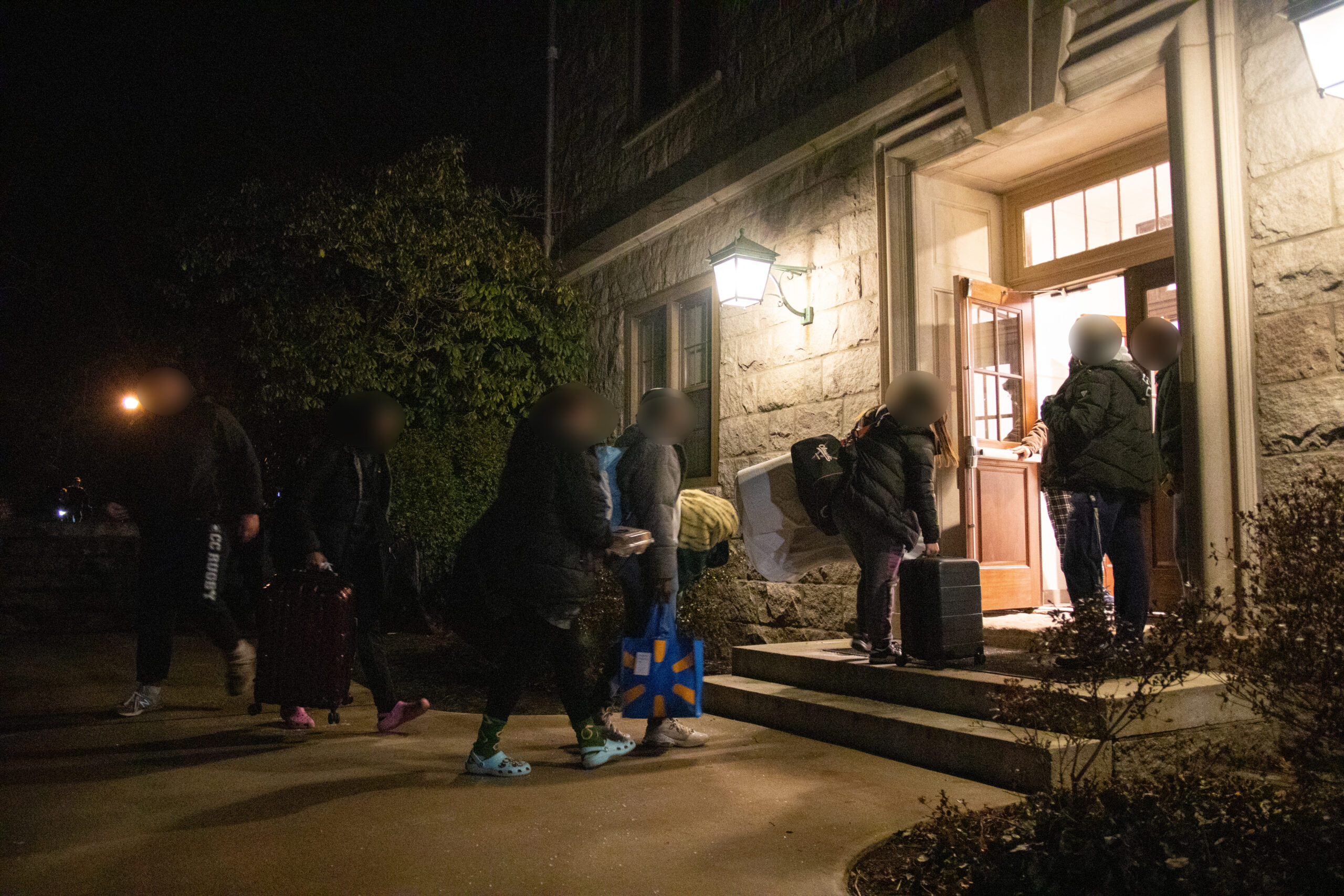
BTS of Sierra’s honor thesis shoot, courtesy of Nic Sanfilippo ’27
When asked about artistic role models, Mayoral first looks around her. She cites her fellow student choreographers, many of them also seniors, as constant sources of inspiration. “I just have so many friends who are such good choreographers,” she says. “I feel like I can’t just pick one.” Beyond Conn, a major influence is Brazilian choreographer-filmmaker Sergio Reis, whose precisely crafted dance films are designed specifically for the camera. He first caught global attention with a viral piece set to “Somebody That I Used to Know,” and Mayoral has been returning to his work throughout the thesis process. “His videos are always very intentional and shot and choreographed specifically for camera,” she notes, “so I’ve been drawing a lot of inspiration from him for my thesis.”
Last spring, Mayoral studied abroad at FAMU, one of the world’s oldest film schools, in Prague. The program was intense: students pitched film ideas, and only some projects were selected for production. Mayoral’s concept—rooted in her relationship with her grandmother, who passed away a few years ago—was chosen. The film examines what it means to love someone deeply while growing up far away from them, and how distance complicates closeness. She shot with Czech actors in a small house on the outskirts of Prague, navigating a new culture while directing her first solo project. “It was very different from making a film at Conn,” she reflects. “I didn’t know exactly what was going on at all times, but it was a very good experience.” That film, she says, gave her confidence and practical skills that are now shaping her honors thesis.
If the emotional and conceptual stakes of the thesis are high, so are the logistical ones. Instead of making a smaller-scale film with a handful of performers, Mayoral chose a project that involves roughly fifteen dancers, plus herself and a full crew. “Logistically it’s been very hard to get everyone at the same places at the same time, figure out all those different schedules,” she admits. She could have opted for an easier route, but decided to honor the scale of her vision. “For the vision I had, that’s what I wanted,” she says. “So sticking to that and being like, okay, that’s what I want, now let’s make it work, has probably been the biggest challenge.” Over time, she has come to see the project as less about one person “in charge” and more about a collaborative ecosystem. Crew members and dancers, she notes, are “helping me out just as much as I’m helping them,” and their motivation has been crucial to making the film possible.
Mayoral can point to a specific moment when she first started to see herself as an artist. In her first year, she choreographed a piece for the Dance Department’s February student work show, an intensive process in which students receive weekly feedback from faculty. The piece tackled climate change and patriarchy—“I was trying to get artsy with it,” she says with a laugh—but it resonated far beyond her expectations. “I still have people who talk to me about it to this day,” she says. For her senior dance capstone, she plans to reset that work, revising and deepening it with what she has learned over the last four years. The reception to that first piece, and the strangers who reached out afterward to tell her how it affected them, became a turning point in her decision to keep choreographing and, eventually, to carry that sensibility into her films.
Looking ahead, Mayoral is open about the uncertainty of a post-graduation path, but clear about her priorities. “I definitely want to keep being involved in film and dance,” she says, mentioning interests in arts administration, choreography, and writing and directing. She jokes that she and her film-major friends plan to “keep each other employed” someday. For younger students interested in film, dance, or any art form, her advice is simple: step outside your home department. “Even if you’re just a film major or just a dance major or just a studio art major, take classes in some of the other art departments,” she says. “You’ll be surprised how much that can influence the art that you’re already doing.”
This semester, audiences will have two chances to see her work on campus: the Senior Dance Capstone Concert, scheduled for the weekend of April 17 and 18, and a yet-to-be-announced screening of her thesis film, which she hopes to present alongside an equally ambitious project by her friend and fellow film-and-dance double major, Sam Walker. Whenever that double feature lands on the calendar, it will offer a window into a generation of Conn artists who, like Mayoral, are choreographing not just bodies or images, but new ways of seeing.