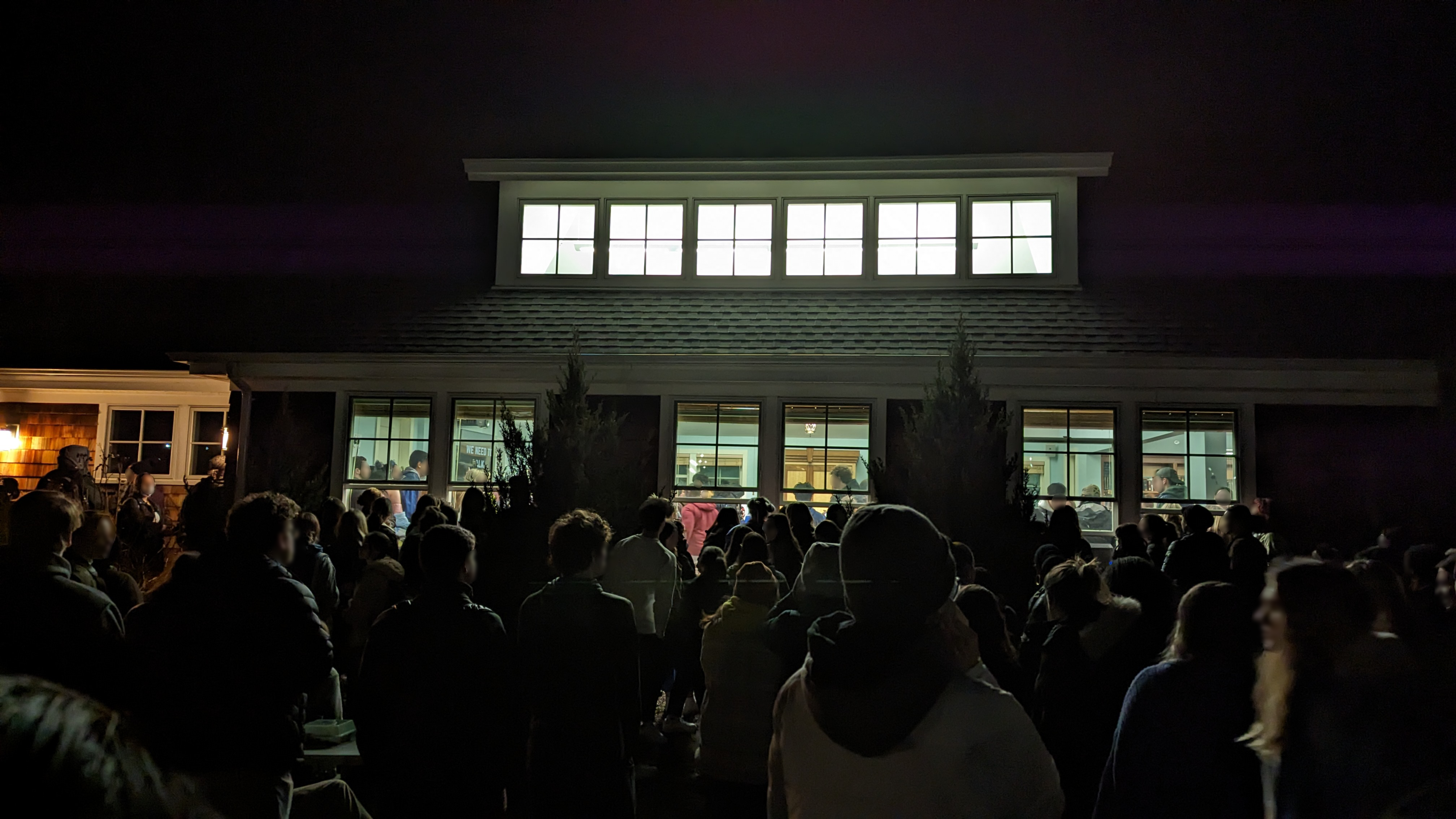
As a part of an event series to celebrate Black History Month, the Connecticut College Black Student Union hosted a journalism and media panel, “Telling Our Stories,” earlier this month on February 11, made possible by the Sheris ‘86 & Thorn ‘88 Pozen Endowed Fund for Excellence in Journalism, Writing, and Media. Other events in the series included partnerships with the Ruby and Calvin Fletcher African American History Museum, Mitchel College, and SVPA. Monday’s panel featured four speakers, in person and virtually– Jason Frazer, a meteorologist and storyteller with Drizzle Weather, Romney Smith, a reporter with NBC 4 New York, Eric Sellers, a producer with ESPN and President of the Southern New England Association of Black Journalists, and Richard Washington III, a senior recruiter at CBS.
Christina Flowers, Director of Media Relations and advisor for BSU, and the BSU co-presidents, Kyaira Hall ‘26 and Osaretin Erhunmwunse ‘26, gave an introduction for the panel and moderators for the evening, Jeff Strabone, Professor of English and Director of the Media, Rhetoric, and Communications Pathway, and BSU’s first-year representative, Asha Horton ‘29. Horton kicked off the event by asking the audience of students and community members, interested in journalism or in representation, to shout out in a couple words what media meant to them in the modern day. Responses from the crowd included “controversial,” “social,” “transparency,” and other terms related to the contentious political climate surrounding journalism, especially in the past couple of years.
The panel began with individuals talking more about how they got into journalism, and what they do in their current positions. Washington, who has worked at nine different television stations across the country, first got into sports journalism, before getting interested in reporting while at Syracuse University. He noted a pivotal moment in his career as reporting on Hurricane Katrina from Richmond, Virginia in his first or second year producing– the Black female anchors in the newsrooms had been the ones to say, stop “calling people refugees.” Washington noted: “That’s the power of our voices in the newsroom, we affect how all people are portrayed on-air.”
Sellers described his unique journey to sports reporting, where he had originally worked for a PR firm, before deciding to switch careers in his 20s, when a coworker suggested he should use his passion for sports for journalism. “Some people come into your life and send you on a journey,” said Sellers. After attending Georgetown for Sports Industry Management, he interned with different teams and radio stations, before getting hired by ESPN while at a National Association of Black Journalists conference, ten years ago now.
Romney Smith, who spoke to us over Zoom alongside her husband, Jason Frazer, who is also a journalist, described her passion for reporting and news and her journey from pharmaceutical sales into reporting. After calling reporter schools, and asking, as she joked, “what do I need to be a reporter– I’m nosy, I want to get paid for it!,” Smith went back to school for journalism, and began working for a station in Georgia. There, she described her process of trying everything, from directing to producing, and various positions in the newsroom such as investigative reporting, before she became a morning news anchor and general reporter, which she works as now for NBC 4. Smith’s advice from her journey between different positions was to “play to your strengths– sometimes you have to admit if you’re not good at something.”
Jason Frazer, also virtual, had a slightly different journey from some others on the panel, as he’d worked as a banker until the 2008 financial crisis, and decided to pursue his love of reporting and storytelling. He advised that aspiring journalists “have to get used to rejection– [he] applied to 110 TV stations until [he] got a good offer.” Since then, he’s worked all over the Northeast, first as an investigative journalist, and later as a meteorologist. Though he noted that this career switch wasn’t exactly profitable, he encouraged students to “always follow [their] dreams” regardless. Frazer has since left the industry, and works with Drizzle Weather, producing STEM education and entertainment for kids.
Frazer also noted that the direction of the news industry is very rapidly changing, and in his opinion, the changing audiences point towards influencers as the future of news reporting. Washington, who is a recruiter, also pointed out that the jobs available in the industry have changed a lot since he first began his career, especially in behind the scenes work, where automation has shrunk the newsroom considerably. Competition for jobs is fierce, and more and more students are applying, while fewer and fewer jobs are available. Washington advised students to “network, go to conferences, meet people– you’ve got to grind, whatever you’ve got to do to get involved around school, and around your town.” He said that recruiters are particularly looking for leadership, experience, and how students took advantage of their time: “You’ve got to be exceptional– less and less positions are available for students, but they’re still out there.”
Sellers spoke next about the importance of hiring diverse voices in the newsroom, and the importance of diversity on and off screen was stressed repeatedly by all of the panel members. He told the story of a graphic that ESPN received much public backlash for, where they’d noted a player’s mother’s former addiction while covering the NBA draft– “it was the biggest day of this guy’s life, and they had to air out his mother’s past struggles.” Though the network had tried to frame it as an ‘overcoming-adversity’ story, they’d gone about it poorly– Seller claimed, “if they’d had a person of color in that newsroom, it would not have aired… if you don’t understand the culture, it’s easy to make a mistake: you don’t know what you don’t know.”
Frazer noted the importance of “representing the communities that we serve,” and told a story about his network’s realization that they tended to only have white experts come on air, though that didn’t reflect the makeup of the community watching. Smith agreed, and gave the example that she had been contractually obligated to straighten her hair for the first eight years of her career, and had her hair brought up in every job interview she’d ever had. Today, Smith said she’s stopped giving networks the option, and wears her hair natural: “Your community will appreciate seeing curly hair as professional,” she said, “it’s so important for Black kids in the community seeing news anchors that look like them.”
Washington also spoke about the importance of diversity behind the screen as well, “diversity of thought,” as he described it, including people of different races, genders, sexual orientations, and socio-economics statuses. “We have to be inclusive of all stories,” he said, “and include all sides, leaving our bias at the door.” This often means advocating for stories on underrepresented groups— though the stories featured depend on the philosophy or ‘culture’ of each newsroom, the panel concluded, it can be important to stand up against stereotypes, lack of sensitivity and nuance, or willful ignorance.
Questions from both the moderators and the audience discussed awards, AI and the democratization of reporting, layoffs, having empathy as reporters, and how to be careful in an age of misinformation. Though the panel had different ideas about AI and how it might shape journalism moving forward, Smith stressed media literacy, and asserted that she “[doesn’t] believe attention spans are going down, and if it’s good content, people will watch it: even if news changes forms, it’s not going away.” Additionally, they discussed the current political climate of the country, and how journalists might feel vulnerable, considering the recent arrests of Don Lemon and Georgia Fort in Minneapolis.
As a ‘lightning-round’ question, the panel was asked what they would want students to know about journalism. Washington answered: “it can be a thankless job, with long hours, but you can really make a change in your community. Sellers said, “Networking matters, and make sure you don’t burn bridges, because it’s a very small world.” Frazer advised: “Watch what you put on social media, even if it’s private, because people get fired for things posted ten or fifteen years ago– networks want open-minded journalists, so know that what you post now might haunt you later.” Romney answered that, “If you’re on air, don’t just focus on what you look like, but make it a never-ending quest to write better, connect more, and ask better questions– it’s not just a job, it’s a lifestyle.”