Courtesy of Elaine Sandoval Carrasco ’28
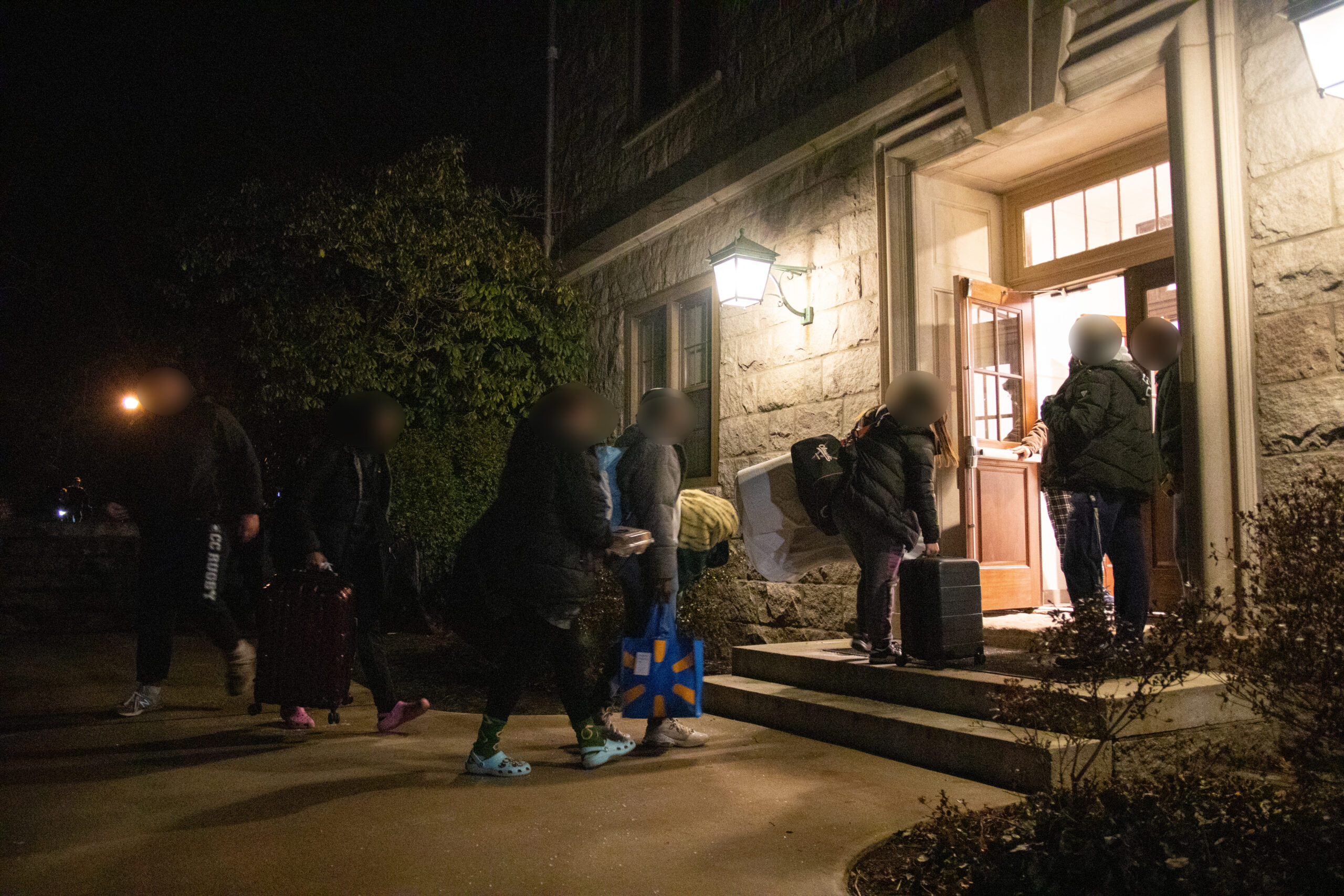
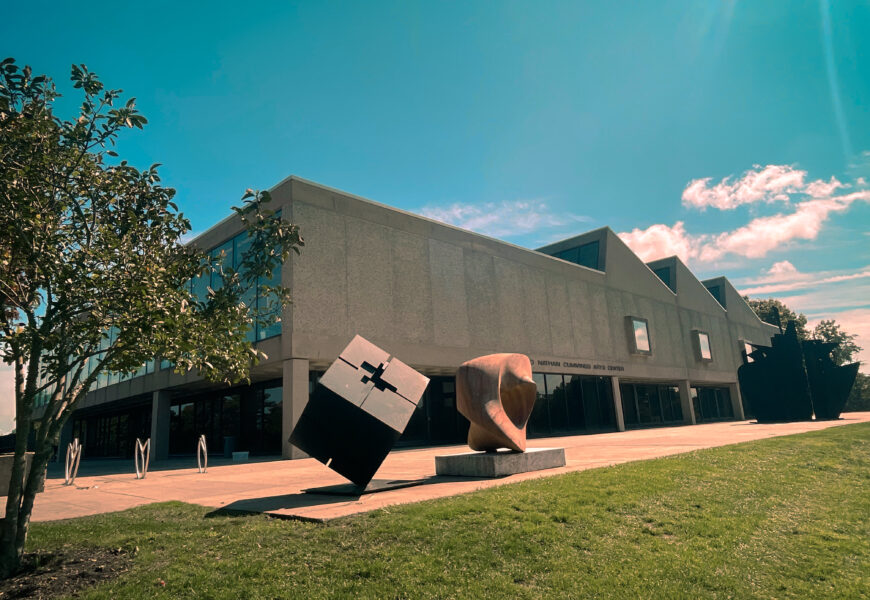
When senior art majors returned to Cummings Arts Center after winter break, many found that the studio spaces they had left in December no longer existed in the same form. Over break, partitions were removed following guidance from the New London Fire Marshal, prompting a reconfiguration of the senior studio layout and a scramble to make spaces workable again before the semester began.
For Professor Chris Barnard, Chair of the Art Department, the priority since January has been staying closely connected to students as they navigate a disrupted thesis semester. “The department has been in touch with senior majors weekly,” Barnard said. “In some sense, we’re lucky that one of the signature aspects of our program is that one-on-one faculty-student interaction, and cohort community interaction, is integral to the senior year.” Seniors continue to meet weekly as a group in the Seminar for Art Majors, hold weekly one-on-one meetings with faculty advisers through Senior Studio, and participate in small group critiques every six weeks.
Barnard emphasized that this structure has helped faculty remain aware of both individual and collective needs. “All to say that students (and their needs) are on the faculty’s radar, both individually and collectively; students have several open lines of communication to identify issues that the department can address.”
On a practical level, the department reallocated space in other teaching studios and provided additional furniture and materials where needed. “We also normally provide financial support for supplies that seniors might need, and this year’s cohort has had access to that as well, and we’re prepared to spend more than usual to help students through this capstone semester,” Barnard explained.
He also highlighted the work of department staff during the transition. “I can also say that I am proud of the efforts of our faculty but also especially our staff—Alison Madole, our academic assistant, and Brian Dimmock, our 3D Fabrication and Safety Technician—to support students through this time.”
One senior, who asked to remain anonymous, described the return to campus as disorienting. “I came back from winter break early and wasn’t able to start working until a few days after the semester started because there was work being done in there and all our supplies were covered in plastic and disorganized,” they said. They recalled Brian Dimmock “basically running around trying to move and save peoples work in the studio as they were tearing down the walls and debris was going everywhere.” The disruption, they said, “definitely put me back a bit.”
While the student felt the department was doing what it could in the moment, they also pointed to longer-standing concerns about the building and resources. “Cummings is not functioning as an adequate space for art making anymore,” they said. “The elevator was down for more than a year, making Cummings not accessible.” They cited overcrowding in the ceramics studio, unreliable heating and cooling, and leaks during rain. “I wish the college would honestly listen to what we need and not make inferences on what is okay and what is not. Also, there’s been a lot more students majoring in art and wanting to take classes in recent years, and there’s not enough faculty or staff to provide exceptional education, they are spread too thin.”
In a January message to seniors, Dean of the Faculty Danielle Egan wrote in an email about how the changes unfolded. “Right before break, the college was notified by the New London fire marshall that some changes had to be made to the former Greer Library space,” she wrote. “The wall that had been erected for senior studio space had to be removed due to its placement near the fire exit. This event triggered a holistic review/inspection of Cummings.” As a result, partitions in the senior studios also had to be removed and replaced with materials that meet code requirements. “The spaces in which you create your continuing work will look different… but you will still have individual spaces.”
As for what comes next, Barnard acknowledged that there are still many unknowns. “The department went through several rounds of exploring temporary room dividers and partitions… and all options were deemed non-compliant by the New London Fire Marshal.” The College is now beginning a longer process that may involve permanent construction, starting with an architectural site visit in mid-April.
In the meantime, flexibility is key. “Some students need walls, some need table tops; some need natural light, others need darkness,” Barnard said. As plans develop, the department intends to gather student input both formally and informally.
Despite the upheaval, Barnard expressed pride in how seniors have responded. “Given the rather massive upheaval imposed on our program… our students have been resilient.” He also called on the campus community to show support. “Perhaps best of all, coming to the Senior Art Major Thesis Exhibition opening reception on Friday, May 1, 5–7pm. It’s always such a beautiful show and a positive event, but this year in particular, I know it would mean a lot to our seniors to feel support from their peers and the campus.”