Photo courtesy of Sarah J./Pixabay.
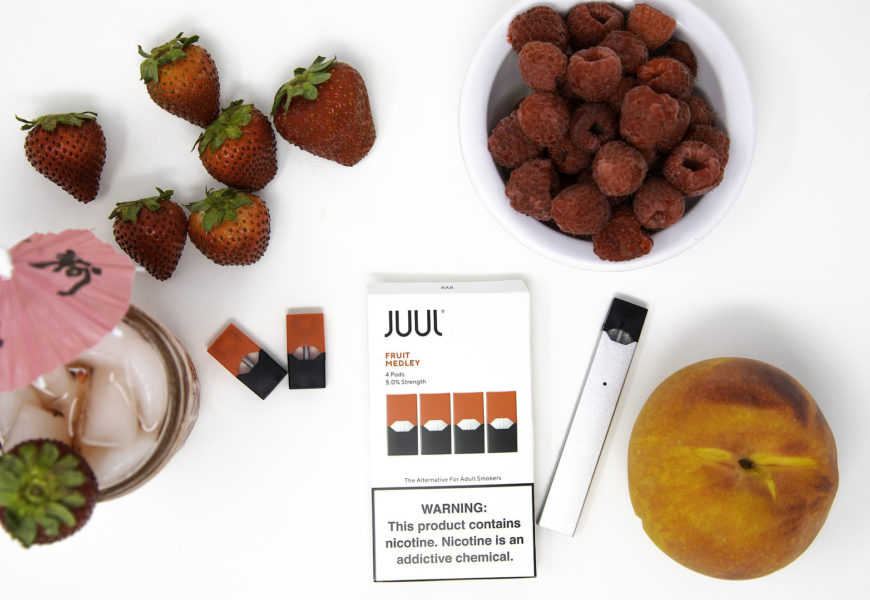
Cool mint, mango, cucumber, fruit medley, and crème brulee; to many of us young adults, we know these vibrant, tasty flavors aren’t just that of gum or hard candies we can purchase in our local gas station, but our most beloved flavors of Juul pods. The refreshing taste of cool mint or the sweet juicy, revitalizing taste of mango can make one’s weekly purchase of Juul pods a grueling and demanding decision. After seeing your favorite celebrities, friends, and hallmates keep stacks of these fun flavored pods in their purses or back pockets, Juuling inevitably seems like the new, “cool,” “pretty safe,” and “slightly rebellious” thing to do. The sleek, high tech design of the Juul resembles a flash drive, and the “smoke” it produces is nearly scentless. Users can achieve their quick nicotine high without the pungent smell of tobacco and inconvenience of needing a lighter.
Juul was created by Stanford University design school graduates, Adam Bowen and James Monsees, in 2015. Each used their knowledge of technology and industrial design to create the world’s sleekest, most widely used E-cigarette product. Although Juul started as a way of providing one billion smokers worldwide with an alternative to tobacco products, it has now become the number one vapor product in the United States used by both once cigarette-addicted adults and teens who were previously nonsmokers. The FDA has banned the sale of Juuls and all other E-cigarettes to people under 18. Although Juul pods and other vaping devices can’t legally be sold to teens, there are hundreds of ways for minors to get their hands on them. It’s extremely easy to buy Juuls and Juul pods online, at a gas station, convenience store, and even smoke shops.
Despite the common belief that E-cigarettes such as Juuls are considered safer, “cleaner” and more “sophisticated” than your traditional pack of Marlboro or American Spirit cigarettes, new research suggests that Juuls are just as bad, and possibly worse, than traditional cigarettes. One Juul pod is equivalent to smoking one pack of cigarettes or 200 puffs. Some teens who frequently Juul can go through one pod in as little as one or two days. These pods have a much higher nicotine concentration than individual cigarettes, which could result in our generation becoming swamped with masses of nicotine addicts who can’t get their custom Louis Vuitton printed Juul out of their mouths. According to the New York Times, “E-cigarettes deliver nicotine through a liquid that is heated into vapor and inhaled, cutting out the cancer-causing tar of combustible cigarettes. But vaping liquids contain additives such as propylene glycol and glycerol that can form carcinogenic compounds when heated.” Diacetyl, the chemical used to flavor the juice in the Juul pods, has been found to scar and obstruct the lungs’ airways. In addition, a study published in The Journal of Pediatrics in March found “substantially increased levels of five carcinogenic compounds in the urine of teenagers who vape.”
Connecticut College student Celia McNally ’22 is aware of the dangers of Juuling and has noticed that a decent number of people Juul on campus. “In high school I noticed way more students Juuling, because it was a new thing and people thought it was so cool,” McNally claims. “But now it seems that the people who continue to Juul in college are doing it out of habit.” Although some college students may still believe that they are Juuling just out of sheer fun, they are most likely in denial about having a nicotine addiction.
Lily Davey ’21 has noticed her peers who are Juul users become irritable, anxious, and nervous when their Juuls are about to die or if they are running out of Juul pods. Juuling is clearly a real addiction and will affect student’s lives in many ways ranging from lung and heart problems to an increase in stress and anxiety levels.
With cigarettes, researchers have been studying the long-term health effects for many years and many people have a pretty good idea of what risks are involved when smoking cigarettes. However, because many of the long-term health effects of Juuling are unknown, we don’t know the lifelong risks of inhaling these flavorings and dyes, which is extremely worrisome. Today’s youth will be guinea pigs of Juul use. Piper Oren ’20 brings up the concern that “because Juuls don’t have the same social stigma surrounding them as cigarettes, even athletes (a group of people usually concerned with their physical well-being) think it’s okay and possibly healthy to Juul, even though they are secretly so bad.”
Even though the chief administrative officer of Juul, Ashley Gould, said that the company’s products are intended solely for adults who want to quit smoking, claiming, “we don’t want kids using our products. Our product is not only not for kids; it’s for non-nicotine users.” Davey believes that Juuls are so popular because they know how to target their product to teens. She claims “the point of Juuls were originally to help people quit cigarettes, but now it seems like they are shifting the target market towards younger people because that’s who are buying their product.” The plethora of flavors, chargeable function, and sleek, compact, portable design can all be seen as marketing techniques that results in its popularity among teens.
Griffin Taylor ’20 has struggled with a nicotine addiction and chose to start Juuling to ween off cigarettes. However, although he struggles with addiction, he is not an advocate for Juul use and even claims “no one should use them.” Taylor states that “the stress from college amplifies my nicotine addiction because I feel like taking a hit of something will make me less stressed. I don’t know if this is a mental thing or just my addiction taking over, but I know that over the summer when I didn’t have school stress I stopped using my Juul.” Cigarette and E-cigarette companies ultimately want to make money above all else, so they target demographics that are most susceptible to being stressed out, such as college students like Taylor.
No matter how stressed, depressed, anxious you are or how much you want to be “cool,” Juuling clearly isn’t the solution. Juuls are part of a billion-dollar E-cigarette business. This company is making millions of dollars off of the insecure, underconfident, rash, impulsive and underdeveloped teenage mind. Juuls are creating the newest generation of nicotine addicts, and in a time when young adults feel refreshed with the idea of having their own independence and living their lives under their own control, a nicotine addiction can really hold you back. All drugs have had their peaks–cigarettes in the late 1950s and early 1960s, general amphetamines and LSD in the 1960s, marijuana in the 1970s, crack and cocaine in the 1980s, and heroin and meth in the 1990s. Hopefully Juuling has already hit its peak, and we will see a decline in users in the upcoming years. Having fun blowing smoke out of your mouth for the image, oral satisfaction or snapchat views is not worth putting nicotine in your lungs and bloodstream. As Taylor puts it, “just don’t Juul, it’s not worth it financially. It’s not worth sacrificing your health. The image of being a Juul user is not something you want. You don’t even get a head rush after the first time using it, you get nothing out of it.” •