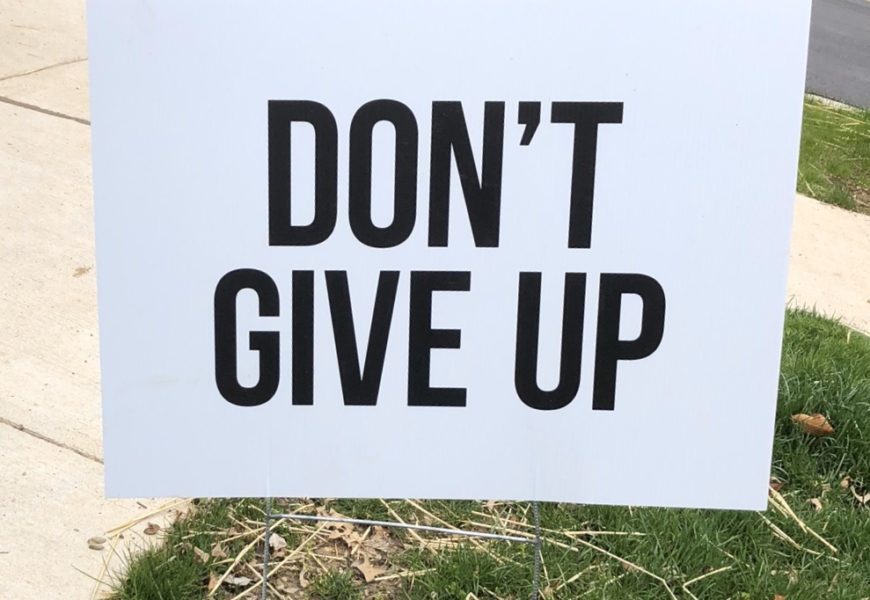
Image courtesy of Clare Peyton, from a neighborhood in Baltimore, Maryland.
When you hear the word “well-being,” what comes to mind? I can guarantee that every person’s answer to that question will be slightly different. For each person, family, community, and culture, well-being likely involves numerous different practices, habits, and routines that keep up a sense of positivity, happiness, fulfillment, wholeness, strength, and mental and physical wellness.
Unfortunately, we are living in uncertain times and that uncertainty can make it extremely difficult to find and maintain a purpose to life. Many of my peers have shared with me that they have been a lot less mindful and healthy than they were on campus, taking the form of under- or over-eating, exercising less, and sleeping more. One of my friends described it to me as “forgetting to take care of myself.” I feel lucky to say that being home has actually helped me find more mindfulness, health, and well-being than I previously had on campus, but this can only happen with a shift in perspective. There are times in which outside stressors, anxieties, and depression-inducing circumstances come in and take over. As we are all living through an example of this with the global pandemic, I suggest that we all recognize that now is the most important time to find little moments of each day to actively, consciously, and thoughtfully remember to care for ourselves. Our bodies, minds, souls, and beings deserve to be treated as well as possible with the resources we have as we fight through a time of global chaos.
Something I have found to be essential during this time is to reframe my perspective on the situation: View what could be seen as a moment of extreme loss instead as a moment for opportunity. For example, instead of mourning the loss of old traditions and gatherings that would be happening if not for the spreading pandemic, try to reframe it as a shift in tradition that allows for new ways of keeping up the old ways, rather than losing the old ways entirely. In reframing your own perspective, be sure to find a way to keep community and group support in your life as well. While it is crucial to recognize that every individual and family is experiencing and responding to this pandemic in different ways, we must also be sure to remind ourselves that we are not alone in this time of suffering.
I’ll begin by sharing some things I have done to tend to my well-being during social/physical distancing requirements. First and foremost, I made a little checklist of reminders and hung it up on my wall where I can see it from my bed and my desk. It says:
Today, have you…
-
- Eaten food that keeps you energized and happy?
-
- Moved around / done something for your body?
-
- Done some homework?
-
- Visited with your parents?
-
- Facetimed a friend?
-
- Asked others how they are doing?
-
- Done something creative?
-
- Made something?
-
- Taken a break?
-
- Changed out of PJs?
- Given your dog some attention and love?
This checklist reminds me of all the little things I aim to do each day at home. This idea can also take the form of making a list of goals at the start of the day. Later, you could conclude the day by making a list of accomplishments from that day, or a list of things and people for whom you are grateful.
Another strategy is creating and maintaining a sense of academic routine. For example, not all of my classes meet together for live virtual sessions, but when I have recorded lectures to watch, I do so during the time when I would have been attending that class back on campus. In addition, I take every opportunity to stay connected with my professors and staff on a personal and individual level. Not only do faculty and staff provide ongoing academic support, but they also take the time to catch up with you. The entirety of the academic community is going through this together, and as students we are not alone.
I have continued to use Google Calendar for my time at home, so here is a sneak peek into some of my weekly activities:
-
- Daily walks (weather-permitting) with my dad
-
- 15-minute bodyweight workout with Analisse Ríos on Instagram Live (@plantsandburpees) at 9:15 am
-
- 30-minute workouts via Zoom, offered by CamelAthletics Monday through Friday at 12:00 pm (https://camelathletics.com/general/2019-20/releases/20200403n4xoh2)
-
- Video chatting with friends and family every day
-
- Watching “The Voice” with my mom every Monday at 8:00 pm and “The Masked Singer” every Wednesday at 8:00 pm
-
- Cooking new meals with my parents (featured on my food Instagram @tastethefresh)
-
- Eating two to three substantive and nutrient-rich meals to keep my body happy (and fun snacks to keep my tastebuds happy, of course)
-
- Audio and video editing to create a virtual performance with the ConnChords (@connchords) which will be posted soon!
- Taking BREAKS from technology, since both education and socializing are expected to happen through a screen now
I recognize this is an extremely difficult time for everyone, and that difficulty comes in many different levels and forms. As someone who has struggled with maintaining mental, emotional, and physical well-being both at home and at Conn, I knew after two days of not leaving my bed that I had to be proactive about tending to my well-being. I feel very grateful and recognize that I am very privileged to have access to so much that allows me to maintain and continue to better my sense of well-being right now.
So finally, I want to say: Please, do not be too hard on yourself! Now is a time when disparities in levels of privilege, accessibility to resources, and mental health experiences are all being magnified across the globe. The message that this time should be used for total self-transformation is not always helpful. During this time of unexpected shifts in routine it is important first and foremost to be kind to yourself, to your mind, and to your body.
There is a quote by Malcolm X that Dr. Jonathan LaPook, Chief Medical Correspondent for CBS News and medical practitioner in New York City, recently referenced on a YouTube live stream with Broadway stars: “When ‘I’ is replaced by ‘We’, Illness becomes Wellness.” If we are going to get through all of this, we must come together to do so. Stay in touch with your loved ones. Reach out to someone you haven’t spoken to in ages. Call someone that you know is suffering through this on their own. Ask others how they are doing. Turn to your community, your family, and your friends for support. Stay present. Embrace the change. Be kind and gentle with yourself. •