Photo courtesy of Jess Rush
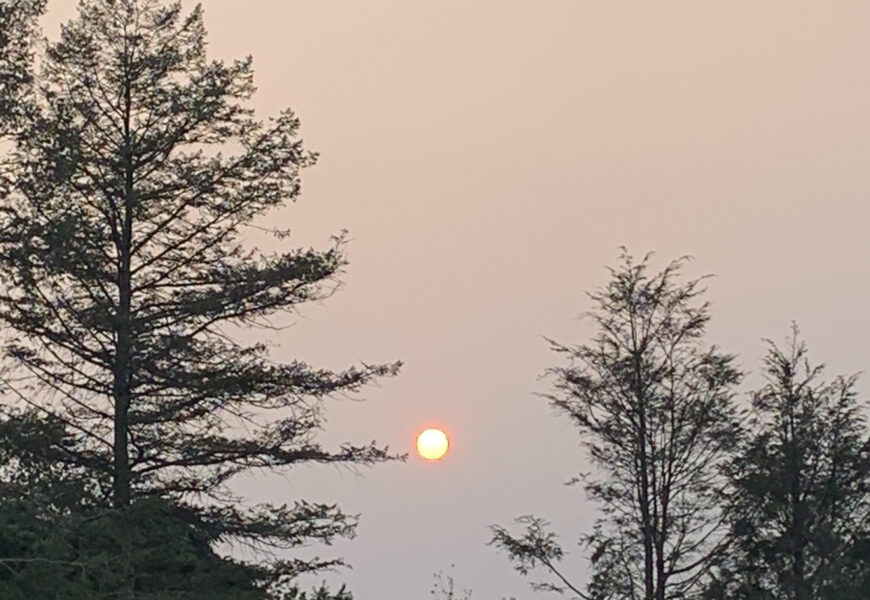
As if 2020 could not get any worse, the West Coast of the U.S. was set ablaze in August and early September. The skies turned orange and smoke polluted the air while millions of acres of land were burned, causing devastating consequences for nearby communities. A single spark turned into a flame and smaller fires combined into huge mega-fires that are now uncontrollable. It is no coincidence that these wildfires keep occurring and wreaking massive destruction. There is a clear and undeniable connection to climate change and the increasingly dangerous wildfires across the West Coast.
While Oregon and Colorado experience larger fires and subsequent worsening air quality, California is the main state that is at the highest risk of such destructive wildfires. Wildfires are a natural part of the ecosystem for these states, but the wildfires that have recently been occurring are not natural. They are a result of human error and the current climate crisis converging into a massive fiery blaze. Years of fire suppression and poor forest management caused the wildfires to grow in size and intensity. The fuel available for these fires is readily available due to the negligent forest management practices that allowed the build-up of vegetation that, when dry, is pure fuel for the fires.
Vegetation quickly turns to catalytic tinder when it is severely dried out by means of a heatwave or drought. Soil, trees, and shrubs all easily spark aflame when a wildfire crosses their path because they have no moisture. Climate change has caused global temperatures to increase since fossil fuels were first burned in the 1800s during the Industrial Revolution. Since then, California’s average temperature has increased by three degrees Fahrenheit. These seemingly small temperature increases have consequences that are tenfold. Hot air that is not at 100% humidity acts like a sponge that soaks up everything in its surroundings. As the temperature rises, the amount of water the air can hold exponentially increases, causing more and more moisture to be sucked from the nearby vegetation. This dried out, crisp vegetation is pure kindling and only requires a single spark to burst into flames.
In California, the heatwave in August and early September dried out the trees, shrubs, and soil making them extremely flammable, further contributing to the already dangerous wildfires. Considering five of California’s hottest record years occurred in the past decade, it is clear that this issue is becoming increasingly pressing. Normally, wildfires would die down due to the cold temperatures at night. However, California’s nights are no longer getting as cold, allowing more time for the wildfires to persist.
All of these different factors are coming together and multiplying the danger and consequences of wildfires. Not only are landscapes at risk of being destroyed, but people’s homes are also in jeopardy. In California, more than 64,000 people were forced to evacuate as a result of the threat posed by the wildfires. That number is not going to go down in future wildfire seasons because houses are still being built in wildfire-prone zones. The WUI, wildland-urban interface, is an area deemed more prone to wildfires. In California, where urban housing is absurdly expensive and is only rising, housing developers are building in the WUI. Other states also have housing in this danger zone, but none at the level that exists in California. Roughly 11.3 million Californians, about 30% of the state population, live in this perilous area. The state has not encouraged people to move out of the WUI and they have not discouraged new construction in the zone. Not to mention the root of the problem: expensive urban housing and a refusal to build more houses in these areas has yet to be addressed let alone solved.
However, the state of California is committing to new climate goals. California has committed to 100% clean energy and total economy-wide carbon neutrality by 2045. These are aggressive objectives, but necessary ones considering the risk the state poses with rising sea levels and dangerous wildfires––problems that are worsened by climate change. It will be interesting to see if the state proposes any new ways to solve the housing crisis or if they choose to address the negligent forest management that exacerbated the megafires. Hopefully, in time, the climate crisis will be handled and California’s apocalyptic, orange, smokey skies will be a thing of the past. As of right now, these wildfires are just another thing added onto the list of insane events that occurred in 2020. Not only does 2020 feel like an apocalypse, but the wildfires make it look like one, too.