
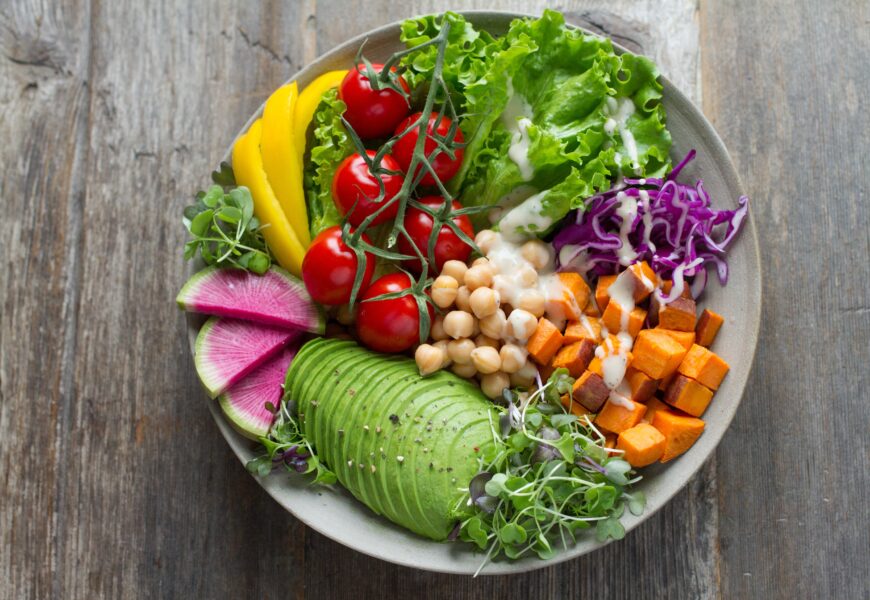
Photo courtesy of Unsplash.
For a regular omnivore, this might go unnoticed, but choosing a meal can be challenging for those with dietary restrictions. Connecticut College has gone out of its way to make sure students enjoy their experience on campus amidst the COVID-19 pandemic. But are they putting the same effort into creating vegetarian-friendly meals? I have been researching the benefits of a vegetarian diet because I wish to become one. It turns out there are quite a few benefits: improved bone health, the protection of innocent animals, and a reduction in the likelihood of acquiring a disease. It is also worth noting that some people are vegetarian for religious reasons. Regardless of the reason one might choose this diet, this much seems to be true: Connecticut College does not offer a great variety of vegetarian options.
Emily O’Brien ‘24, a vegetarian student who is allergic to gluten, said that “the vegetarian options at Conn are kind of depressing. They usually include tofu with some sort of pepper, sprout, lentils, or beans that are supposedly chili. Most of the time, I skip getting an actual meal and just get tofu cubes and salad from the fridge.” Similarly, Elias Garvey ‘24, a pescatarian, often only eats rice, lentils, or a salad. He remarked, that “even though occasionally they have some really good options, most days they tend to have very similar food. The vegetarian options can be especially repetitive since they often consist of lentils, quinoa, or some sort of stew.” People with dietary restrictions on campus are not starving, but why do they have such limited choices? Why is it that there is always plenty of rice and pasta with sauce, even when students get bored of eating this every day? These two options are significantly less expensive than salmon or plant-based meat; however, it would be beneficial to re-evaluate the distribution of food at dining halls. For example, this semester, I have seen less variety of salads at Harris, Jane Addams, and the 1962 Room, all of which have offered the same four options since students got back on campus: Caesar salad, garden salad, arugula salad, and baby kale, grapefruit, papaya salad. Occasionally, they also offer spinach salad with corn and pepitas. A recent addition to the Harris menu is the Beyond Burger, which is an appetizing replacement from the tasteless bean burger. However, the Beyond Burger is served only two days out of the week, on Tuesdays and Saturdays, while the beef burger and chicken patty is a consistent option at Harris. Although there is always a vegetarian option at the grill, it ranges in quality. Many different kinds of meat have been offered for the past four weeks, such as honey pork loin, orange chicken, and chicken wings, providing meat-eaters with a considerable selection.
The lack of variety and options on campus for people with dietary restrictions is an undeniable fact, but it is important to understand why this happens. While speaking to Michael McGuirk, Dining Services Supervisor, he said that naturally there is more variety of meat because the ratio of students who are meat-eaters is bigger than those who do not eat meat. If a student is allergic to a seasoning or a particular food, they can work closely with the Dining Services Board and special meals will be prepared for them. Otherwise, options for all kinds of diets will be very generic. Thankfully, the dining halls do not have poor selections every day, but they tend to get repetitive considering that all three dining halls serve the same food, with exceptions such as Avocado Toast Tuesday for lunch exclusively at the 1962 room. One thing McGuirk pointed out is that if students really were dissatisfied with the food selection, they would have expressed their discontent by now. Garvey and O’Brien are certainly not the only students who are not happy with the lack of variety at dining halls, but neither of them would be willing to contact Dining Services unless more students join them. If we get more students to express their discontent, would it make a difference? When multiple students complain about an issue, shouldn’t it be addressed? How would this issue be addressed by the staff at Connecticut College? Let’s wait and see.









I’m writing this comment from the perspective of a vegan (avoiding all animal products wherever reasonably possible) first-year at Conn. I was formerly vegetarian (avoiding only products that animals necessarily must be slaughtered for) since elementary school, and after stopping my habitual consumption of animal products, mainly including dairy and eggs, in my senior year of high school, I have been an ethical vegan for somewhat over a year now.
Although the point I went from omnivorous to vegetarian (albeit with the full support of my parents, who later changed their own diets) was when I was too young to remember at present, I stuck with it, much like the author, because I felt a sense of compassion for the sentient beings raised in torturous conditions only to have their life violently ended against their will. Since the author mentioned the “protection of innocent animals” in their rationale for dropping meat from their diet, I feel obliged to cite the fact that should an animal suffer the misfortune of being born male or aging past the point of productivity, the dairy and meat industries become one and the same. It is near-impossible to find any large-scale egg farm, for example, which raises both its roosters and hens to the end of their natural lifespan. When I came to grips with this fact, I realized that my actions of consuming dairy and eggs did not line up with my belief in avoiding harm to animals, which spurred me to align my actions with what I actually believe. To assume that every animal whose body was used on behalf of agricultural production, including for the companies which provide their products to forward-thinking institutions such as Connecticut College, lived a full and decent life, is naïve in my opinion.
That being said, I’ve had no trouble finding decent and nutritious options from my meals at Harris. The author seems annoyed at the quality of vegetarian food offered in the cafeteria, but if my campus meals mainly consisted of frozen salad, I’d be annoyed too! Although I might be biased as someone who personally considers lentils and beans both to be near-staples, I’ve found that the warm plant-based meals offered for breakfast, lunch, and dinner have almost always been to my personal satisfaction. I particularly enjoyed the vegan shepherds pie offered a few days ago, but even the more typical stews and curries usually hit the spot for me, especially with additional Spike seasoning (which can be found for cheap at Shoprite).
Essentially, as someone with a diet more restrictive than what the author personally describes, I think it’s a bit disingenuous to claim Conn as something akin to a vegetarian-food-desert. Granted, much of what’s offered in plant-based fare is atypical for the standard American diet, but that doesn’t change the fact that hearty and healthy vegan-friendly meals are served on the regular. With even a dedicated nutritionist on staff, I can scarcely imagine a better place to try going completely plant-based than Conn.