Courtesy of Jan Kahánek
Sometimes, when I return to school after a long break, I experience a shock in the classroom. I realize the pen in my hand feels unfamiliar. I look at the chicken scratch on the page in front of me and wince. Oh no. Have I forgotten how to write?
We handwrite so little these days, the art form has been lost to screens that make our eyes go blurry and our heads hurt. Before I fall asleep, visions of Times New Roman dance behind my eyes. And yes, I do realize that this article was typed on a computer in Times New Roman. The irony is not lost on me.
If only there were an escape from the screens. If only there were a way to work and think differently. As it turns out, I might have just the thing…
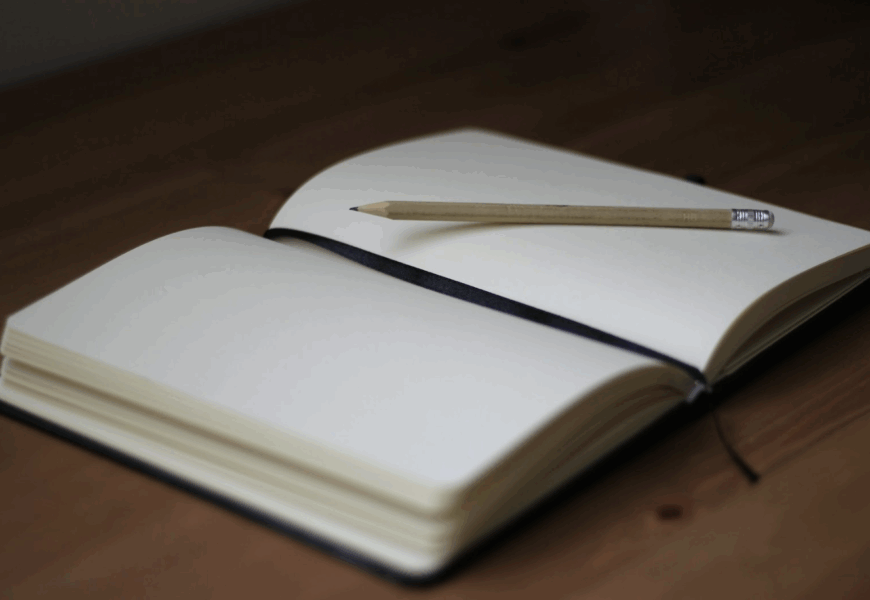
Have you heard of a notebook and pen? It’s the hot new thing. Very on trend. Everyone is using them (or at least they should be!)
I love to handwrite. My class notes, daily ideas, and outlines for novels that I will never write. I love to draw arrows all over the page, connecting ideas. I love to doodle little stars in every corner of the page.
Handwriting helps me understand what I am thinking before my brain knows it. Sometimes the pen just takes over and the page fills, seemingly on its own. That’s not paranormal behavior, just the magic (and science) of handwriting!
I am sure one of your professors has given the spiel about the benefits of handwriting over typing. Some even ban screens from class to promote focus and encourage handwriting. Sure, students will groan and grovel over this decision. “How else will I play 2048?”, they shout from their class that costs $80,000. Unfortunately, the professors are correct (which is to be expected because they literally have PhDs).
There have been many studies that have proven the act of handwriting slows down your thinking. That may sound like a bad thing–it’s not! For example, when we type notes in class, we often unconsciously write down whatever is said or written on the board. We are not necessarily internalizing the meaning of these words. Handwriting literally forces us to slow down. In doing this, our brain is forced to process what we are hearing.
I am not in favor of entirely eliminating technology in favor of handwriting, of course. If all of my Moodle posts were on paper, my hand would surely give out. Technology, in moderation, is a wonderful, unbelievably useful tool. Using a tablet and stylus is a great way to combine the benefits of handwriting with the efficiency of modern technology.
Professor José B. González says that “when you handwrite, you’re more likely to forgive yourself.”
Professor González is a professor of English at the Coast Guard Academy and is teaching Reading and Writing Poetry at the College this semester, which I am taking. As an award-winning poet, he has many thoughts on the writing process. One of his strategies is to type his work, print it out, and mark it up in writing. He also emphasizes that writing can be spontaneous. If he is in the car, he asks Siri to write down any ideas he has.
Of course, use whatever materials feel right for you. You do not have to go off the grid to write anything, especially poetry. If you are partial to quill and ink, by all means, go to wherever they still sell those ancient relics. Write a heartbreaking poem on your notes app right next to your grocery list. Carry a pocket notebook with you and mysteriously write in it at every chance. Long line at Harris? Tap into your creative genius. All you need is a pen and a napkin.
When writing my poems for class, I’ve found that a pen and paper are my best friends. I will sometimes take up five pages of my notebook writing one poem. While it is a messy process, it works for me. Among the scratched-out sentences and silly rhymes, I find a throughline. All of the mistakes lead me closer to the final product. When I work on a computer, I erase what I don’t like. After a while, I am still left with a blank screen. It can be demoralizing. By working on paper, I can see the entire creative journey.
Professor González said that students are usually not forgiving of themselves. He wants them to know that a first draft is just an attempt. Don’t look at your mistakes as a waste of time, but a necessary step in untangling what you truly want to say.
We all have valuable thoughts and experiences. Write them down. It doesn’t matter whether or not you share them. Just tapping into creativity can be an empowering experience. It can teach us things about ourselves we may have never said out loud.
Anyone can be a writer; the only requirement is that you write. Write as much as you can. Write wherever you are. Write when you’re glowing with happiness or when you are in the absolute trenches. Write until you surprise yourself.