Courtesy of Christopher Steiner
“Photography and the Painted Image”, the latest featured exhibition at the Lyman Allyn Art Museum, explores the complex and nuanced relationship between painting and photography as captured throughout history.
Divided into 3 main sections, the exhibit shows how images incorporated painting from most subtly through realistic backdrops and light coloration, to most elaborately painted photographs with heavy over-painting and stylized illustration. Each section’s walls feature a tapestry of postcards, backdrops, tintypes and prints, a collection spanning from the early 19th century to just before the 2000s.
“…the works in this exhibition show how painting shaped not only the settings and surfaces of photography, but also expanded the capacity for imagination, spectacle and self-representation in photographic images, offering new ways of seeing and being seen.” Professor Steiner wrote.
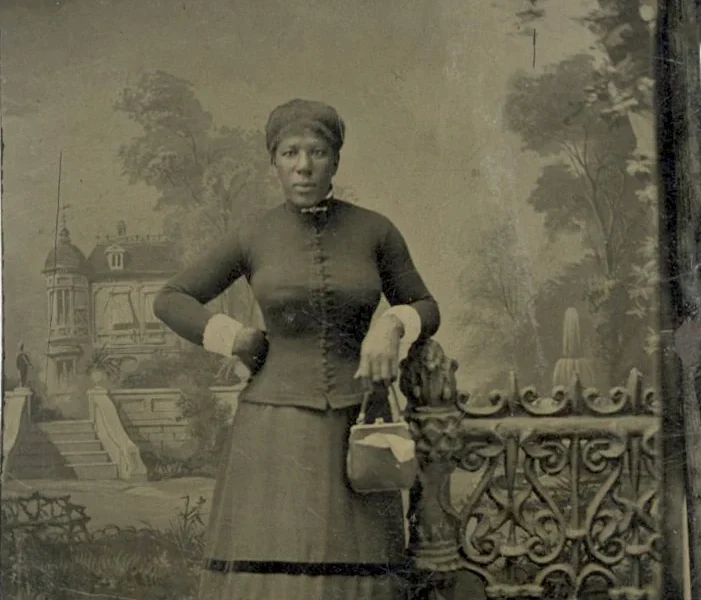
Some highlighted pieces included the painted backdrops, which were included in the first section. They were displayed both in use in portrait images as well as on an in-person painted canvas. Painted backdrops were used due to the early technology of cameras, requiring long exposure times and the convenience of a still-standing background. They also allowed sitters to place themselves into any environment regardless of their own surroundings and means. Portraits were set in cities, lush grasslands, palaces and even Niagara Falls.
The second section looked at overpaintings of photos, using paints and crayons to color, correct and enhance images. This collection featured a particular emphasis on images sourced from China. It was explained that, in socialist China, themes of memory, individuality and visual identity developed vastly. Black Americans too, followed this technique of using color and design to express themselves, and soon the technique became more than coloration and into a form of pure artistic expression.
The third looked at the usage of comic foregrounds, like the ones we see today at carnivals and boardwalks, pushing ideas of realism into humorous caricature and comedy. “By stepping into exaggerated characters and outrageous scenarios, sitters temporarily shed everyday identities and carnival…” Professor Steiner wrote.
The works featured reflect over a decade of collection and curation by Christopher B. Steiner, Connecticut College’s Director of the Museum Studies Certificate Program and professor of Art History and Anthropology. It also includes contributions from Professor Steiner’s Fall-semester class, “Perspectives on Photography”, a course exploring the art of the photographic process, and the impact and involvement of image in society. Students participated in the research and execution of the exhibition.
The exhibit opened in January, and will remain until April 12, 2026.