
Courtesy of Emiliano Vittoriosi
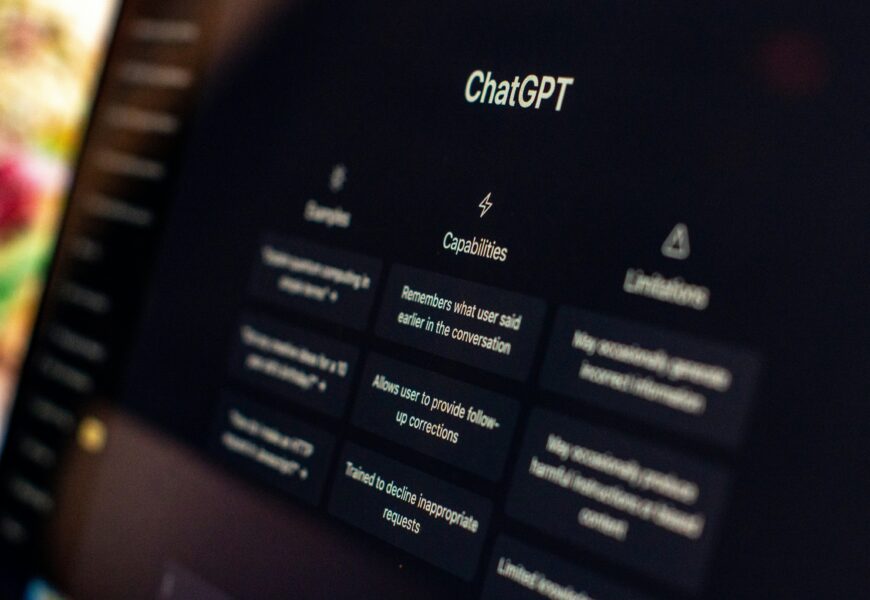
The speed at which AI tools have advanced and invaded our lives is truly staggering. Just a few years ago, many of us had never heard of ChatGPT or Gemini. Now, it’s hard to run a Google search without an AI-generated summary appearing whether we want it or not. The question weighing on the minds of many students, professors, and administrators is, what impact will these tools have on higher education, how students learn, and how professors teach? We spend four years here sharpening our critical thinking skills, improving our ability to connect disparate ideas, defend our positions, and learn to incorporate novel ideas. I believe these are the skills that will set us apart in the working world, and while we can’t avoid AI or fall behind on learning how to use it in the classroom, we need to focus on traditional learning techniques.
At Connecticut College, each professor seems to have their own attitudes regarding the use of AI, and their own policies about it in each of their syllabi. In a few of my classes this semester, we have talked about how there are a few upsides to this technology. These tools can be used to brainstorm, research, or even to randomly generate groups for projects. I have heard anecdotally that some professors have begun to use it more widely in lesson planning. One student I spoke to, who requested anonymity, said, “A philosophy professor of mine has on multiple occasions used AI to aid his teaching of the class. He asked ChatGPT for outlines of information relevant to our class. There are at least a few pages each time, and he has it there in case he needs to reference it. I’d assume a philosophy professor would understand the ethical implications of AI, but alas.”
I have not experienced this. In fact, Prof. Anna Vallye of the Architectural Studies department, whom I had for her Imagine Home class last semester, made sure assignments were free of AI by making sure assignments were 100% pen and paper. There was no tech allowed unless it was to research for our group projects. In speaking with Vallye, she explained that while she is not 100% anti-technology/AI, she only allows it in a way that will help us as students think of ideas, not do the work for us. She told me that because college students are in a period when their brains are still developing, it’s easy to hinder development in the critical thinking part of the brain, when college is all about developing and learning to form your own ideas and use that part of your brain. “Similar to athletics,” Vallye explained, as a few fellow students in the class were on sports teams, “if you don’t practice your skills daily, you will lose the ability to do them as well as when you were practicing every day. You’re not actively developing that part of your brain when you use Chat and other forms of AI tools to do the thinking for you.” Additionally, people’s brains are not even fully developed until 25. Much like a sport, critical thinking and analytical skills are something we as students need to practice every day.
I wonder how we as a school and as students will continue to adapt to these technologies as they become more ingrained in our everyday lives and harder to avoid. As someone who hopes to teach or play another role in the educational field post-Conn, I’m worried about the current, as well as the future, state of education. What will the teaching world look like by then? What will school lessons look like? How will students’ critical thinking skills change? Conn is in the middle of a three-year study, AI@Conn, to evaluate the role of AI in education. While we won’t have those results until after I graduate, I found it interesting that the CEO of one of the largest AI companies, Anthropic, recently announced that studying the humanities and pursuing liberal arts degrees will be more important than ever in the era of AI.
Ultimately, I hope Conn’s AI initiative and thoughtful professors like Vallye lead the way in showing us how to harness AI without sacrificing what makes a liberal arts education transformative and unique.









[…] Learn the total article here […]