Courtesy of Markus Winkler
At a campus like Connecticut College, where the vast majority of students are left-leaning or liberal, it is very easy to ignore the issue of free speech. Of course, if 90% or more of the student body loudly share the same views, it is easy to forget that those who oppose such views exist in the space. It is easy to defend speech we agree with, and many probably do this without thought. It is much harder, and far more important, to defend speech that challenges, unsettles, or even offends us.
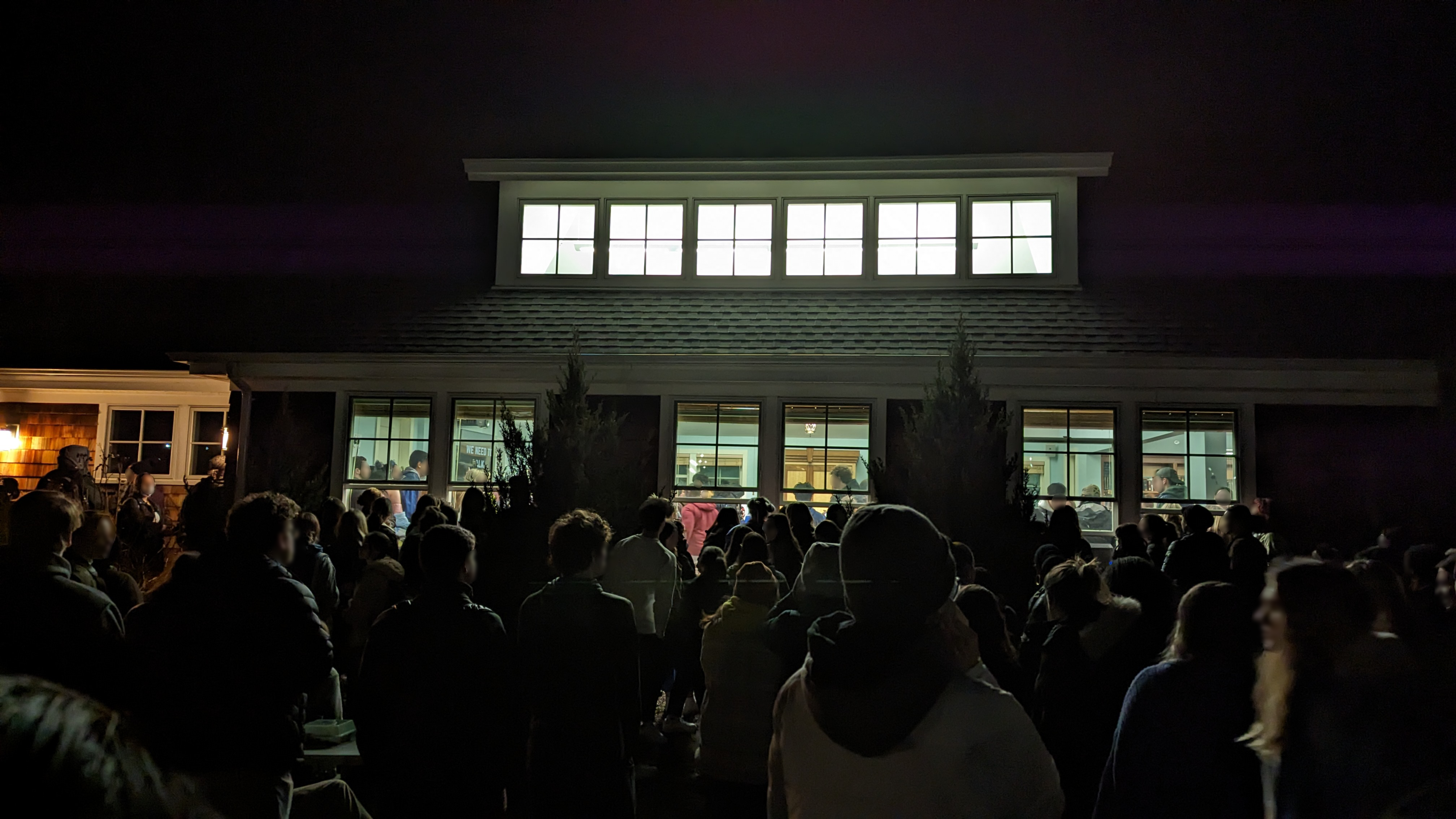
The recent establishment of a Turning Point USA chapter on campus has revealed this lack of actual support for free speech clearly. Almost immediately, backlash followed: students openly questioned whether such a club should even be approved, expressed hate and hostility toward its members, and, especially when the members were first visible, posted hate comments on YikYak. Regardless of one’s opinion of Turning Point USA, this reaction should prompt those who did this to ponder whether they actually believe in free speech on campus, or only in speech they find acceptable. If we claim to value free expression, then that value must extend to viewpoints we oppose. Otherwise, “free speech” becomes an empty, selective, and inconsistent concept.
This is far from a new issue. The philosopher John Stuart Mill can provide us with insight in his writing, On Liberty. He states that “The peculiar evil of silencing the expression of an opinion is, that it is robbing the human race; posterity as well as the existing generation; those who dissent from the opinion, still more than those who hold it. If the opinion is right, they are deprived of the opportunity of exchanging error for truth: if wrong, they lose, what is almost as great a benefit, the clearer perception and livelier impression of truth, produced by its collision with error.”
This quote feels especially urgent right now. Many people claim to support free speech in principle, yet seek to limit it when confronted with ideas they consider offensive or immoral. But Mill’s argument reminds us that the value of free speech lies precisely in its ability to force ideas into conversation and debate.
A recent article written about TPUSA on campus argued that “An organization that has been associated with the far right has no place on a campus that claims to value diversity, equity, and inclusion.” At first glance, this statement could seem aligned with the college’s values. But it presents a contradiction. Diversity, equity, and inclusion, while it should support identity, should also encompass diversity of thought. A campus committed to inclusion should not exclude students based on their political beliefs. If liberal and progressive organizations are welcome (which seems to go without saying on this campus), then conservative organizations must also have the same opportunity to exist, organize, and express their views.
This does not necessarily mean endorsing those views. Supporting someone’s right to speak is not the same as agreeing with what they say. I, personally, am extremely against TPUSA and everything they stand for. However, just because I disagree with their politics and believe it encourages division and hatred doesn’t mean I don’t support them being able to have a club. I am no more entitled to say all of this than they are to express their ideas. We don’t even know yet what this club will do! For all we know, they could engage with liberal views in debates and not be in support of 100% of the things that Charlie Kirk was. Opposing their existence without even knowing what they will do is a clear indicator that this is an issue of their right to speak, not what specifically they have said.
While I can undoubtedly acknowledge that TPUSA has openly advocated views that are racist, sexist, homophobic, etc, I believe that the club should be allowed to exist so long as they do not also act in accordance with those views in a way that significantly harms people of the campus community. We must allow them the opportunity to exist before presupposing what they will or will not endorse. Maybe the chapter founder agrees with only the political and economic parts of TPUSA, and will not spread these hateful ideas that the organization has ties to. Consider this similar case: the Bible has a lot of offensive rhetoric in it (sexism, homophobia, to name a few). And some Christians use those ideals in the Bible as justification to be hateful to other groups of people. However, just because the Bible has this, it does not mean a Bible study club shouldn’t be allowed to exist. A Bible study club can consist of religious people who don’t believe all of those things but still find value in other parts of the text that guide their faith. A TPUSA chapter could possibly exist to solely discuss politics and not endorse the hateful aspects. Approving the club allows them to do this. Technically, the alternative exists of expanding a Republican club, which avoids the issue of TPUSA’s problematic bigotries. But this is also an attempt to silence many voices, since it presupposes that only those who label themselves as Republicans would join the club. I know many Independents who support the organization. Therefore, the option that is not limiting and restrictive is still to allow them the opportunity.
Connecticut College, as an institution, can and should promote diversity, equity, and inclusion through its policies and support systems for all students (including those who feel targeted by the values of TPUSA). But students, too, play a role in shaping the application and practice of those values. If “inclusion” only applies to those who already agree with the majority, then it is not truly inclusion at all. The presence of a Turning Point USA chapter, in my opinion, is not a threat to these values but actually a test. Free speech is certainly not always comfortable. But it is essential. And if we only defend it when it is easy, we do not defend it at all.