Courtesy of Winston Chen
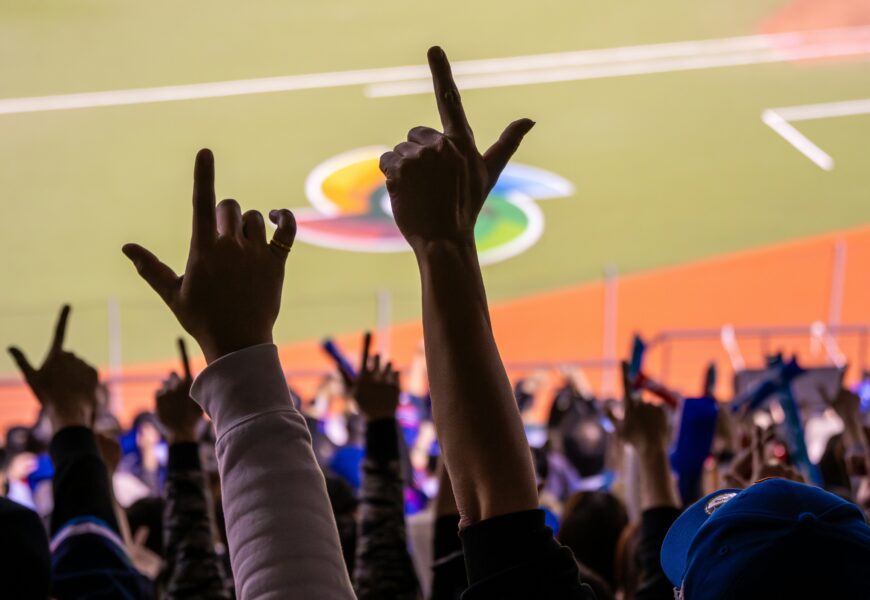
The hype surrounding the 2026 iteration of the globe-spanning World Baseball Classic cannot be understated. It certainly goes without saying that the instant classic that was the 2023 WBC championship final that pitted the United States against Japan drew a significant amount of attention to the event that hadn’t been as popular in prior iterations. The final out saw former Los Angeles Angels teammates Mike Trout and Shohei Ohtani, both arguably among the greatest players in the history of the sport, facing each other down in opposing uniforms. Striking Trout out on a full-count, Ohtani cemented Samurai Japan as the 2023 WBC champion in a game that was watched by 62 million viewers across Japan alone, representing roughly 42.4% of all households in the country; more than all U.S. viewers of each game of the 2023 World Series combined. It can be said therefore that the leadup to the 2026 iteration of the tournament drew much attention, and the results were unprecedented.
Like 2023, the 2026 WBC featured teams representing countries from across the world, including Brazil, Italy, Korea, the Netherlands, and Australia just to name a few. The level of support from fans varied from each country, with fans from Great Britain being a very small and quiet minority, U.S. fans complaining about the risk for injury for MLB players (although spring training occurred at the same time) and fans from Venezuela and Japan proudly backing their countries’ participation. Heavily favored teams for the championship included the defending team Japan, the United States, and the Dominican Republic, but what ended up happening would “shock the world” as Great Britain’s SS Jazz Chisholm Jr. of the Yankees ill-fatedly claimed of his team.
The WBC is organized into three stages; friendly games leading into the tournament that bear no consequence on standings, a pool stage, and a knockout stage that spans from quarterfinals to the championship final. Getting eliminated in the pool stage at the bottom of their respective pools were Panama, Brazil, Czechia, and Nicaragua. This means that they will have to requalify for the next iteration of the WBC. Czechia’s participation in the WBC is always a welcome sight given their underdog status, owing to the fact that the majority of their players are trade workers who play baseball on the side, yet are able to represent their home nation on the big stage. A key highlight of their participation was the performance of RHP Ondřej Satoria, an electrical engineer who rose to fame for striking out Shohei Ohtani in the 2023 tournament. Satoria, in what would be his last bout with the Czechia national team, posted 8 1⁄3 innings without letting up a single run, earning a standing ovation from Czech and Japanese fans alike. Also eliminated but still qualifying for the next WBC were Cuba, Columbia, Mexico, Great Britain, Australia, Chinese Taipei (Taiwan), Israel, and the Netherlands.
The Dominican Republic and Samurai Japan advanced undefeated, as well as team Italy which was a surprise to many, wherein they pummeled Brazil, Mexico, and even the United States to claim their spot in the knockout stage, celebrating with a shot of espresso in the dugout following each home run. They would ultimately defeat Puerto Rico in their quarterfinal appearance on March 14th, but this wasn’t the upset to turn the tournament on its head. On that same day, the stacked Venezuelan team would eliminate defending champion Japan eight to five. The U.S., seemingly scraping by in spite of having more star talent than 2023 and being led by team captain Aaron Judge of the Yankees, narrowly topped Canada and moved on to the semifinal. The powerhouse Dominican team would blast Korea out of the water 10-0, moving on to face the U.S.
The semifinals would be very widely talked about. Venezuela, although bearing a very talented lineup, did not come into the tournament with as high expectations as some of their competitors. In spite of this, they would wind up toppling the then-undefeated team Italy four to two to secure their spot in the championship in what would be the first time in team history. The result of the semifinal between the U.S. and the Dominican Republic proved highly controversial. Leaving eight runners stranded and only putting one run on the board, D.R. was playing a very close game with the Americans who only put up two. In the bottom of the ninth, Dominican shortstop Geraldo Perdomo was at the plate with a runner at third and had the weight of either tying up or winning the game on his shoulders. On a full count, Mason Miller dropped a slider at what appeared to be below Perdomo’s knees which would have constituted a walk, but home plate umpire Cory Blaser apparently didn’t think so, ringing up Perdomo to end the game to the uproar of Dominican fans and players alike.
The 2026 World Baseball Classic final took place on March 17th, between the United States on their third consecutive appearance and Venezuela for their first time. There was a strong political undercurrent to the game owing to a January military incursion in which the U.S. Army extracted Venezuelan president Nicolás Maduro in an overnight raid. Maduro, a deeply unpopular figure among Venezuelan expats in the U.S., inadvertently inspired increased fervor among fans attending the championship game, who went as far as yelling chants in opposition to him. In spite of the political situation, baseball was played and it was incredible. The U.S. offense proved to be very silent outside of an eighth inning two-run homer from Bryce Harper to tie up the game. In the ninth, Reds SS Eugenio Suárez drove in Javier Sanoja with a double to take the lead for team Venezuela. Unable to come back in the bottom of the ninth, the U.S. would be eliminated and Venezuela was crowned World Baseball Classic champion for the first time in team history. Acting Venezuelan president Delcy Rodríguez would declare the following day a national holiday to commemorate the win, potentially symbolizing the culmination of what could be the turning of a new leaf for Venezuelans still coming away from the sudden change in leadership.