
A common misconception in DeFi is that a wallet can make a transaction safe simply by showing a green confirmation screen. It cannot. A wallet can improve the quality of the decision by explaining what a transaction is likely to do, which contracts it will touch, and whether it appears to grant a risky token allowance. But the final risk still depends on the contract, the market, the account, and the moment in which the transaction is executed.
That distinction matters because many losses do not begin with a dramatic transfer. They begin with an approval: a user authorizes a decentralized exchange, lending protocol, bridge, or unfamiliar contract to spend a token on their behalf. Transaction simulation and token approval management address different parts of this problem. Simulation asks, “What may happen if this transaction succeeds?” Approval management asks, “Who is already allowed to move my tokens, and for how much?” Used together in a Rabby browser extension workflow, they create a more useful pre-signing discipline than either feature provides alone.
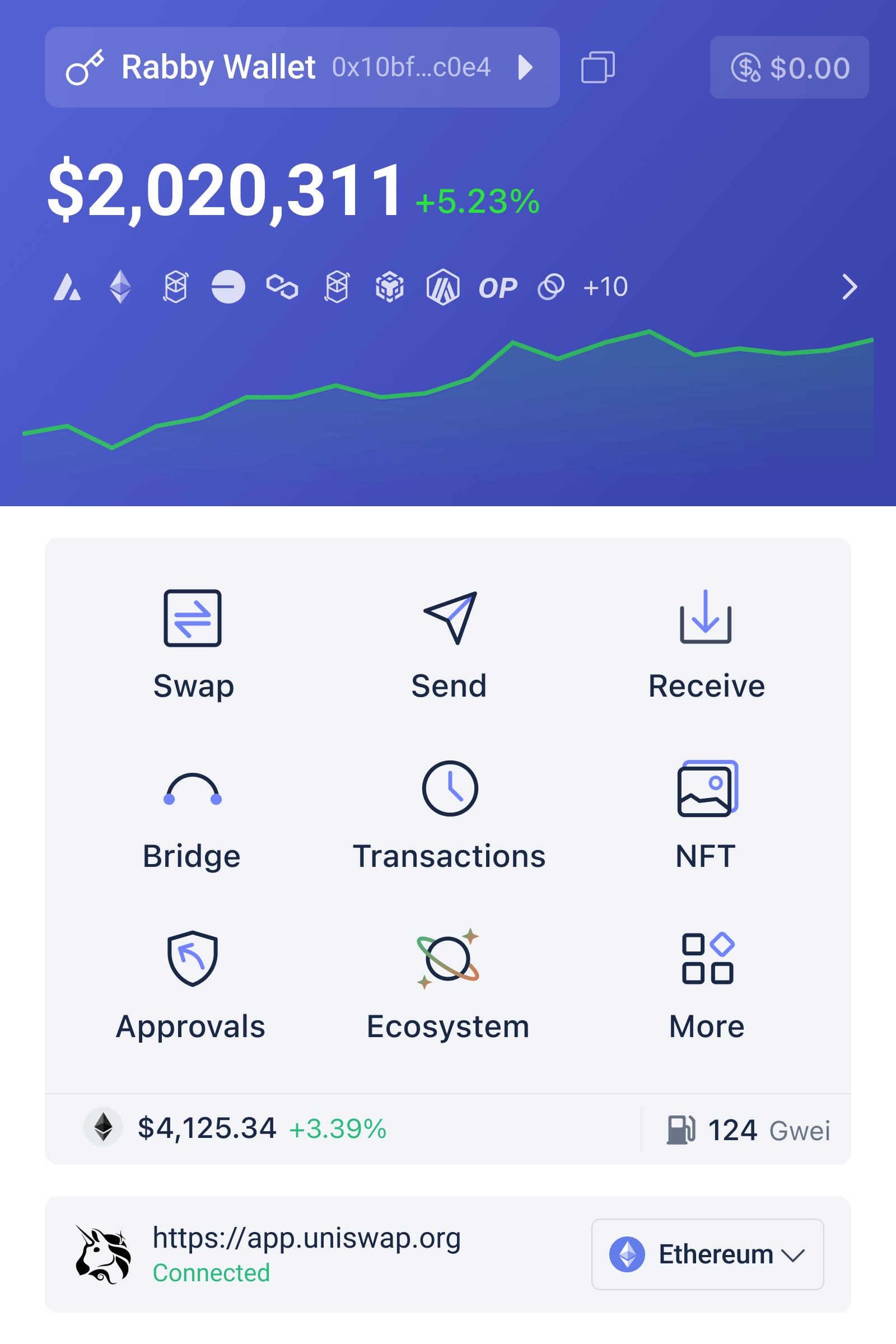
Simulation Versus Approval Management: Two Controls, Different Jobs
Transaction simulation is best understood as a rehearsal. Before a transaction is submitted, a wallet or supporting service can attempt to execute its logic against a representation of the current blockchain state. The result may reveal expected balance changes, token transfers, contract calls, approvals, or a likely failure. This is valuable because a raw transaction is mostly machine-readable data: a destination address, encoded function parameters, and a fee setting. Simulation translates some of that data into consequences a human can inspect.
Approval management operates at a different layer. When a user approves a token, they are usually not sending the token immediately. They are writing an allowance into a token contract’s storage. That allowance records that a particular spender may transfer up to a specified amount from the user’s balance. A later call—perhaps a swap or deposit—can use that permission. The important mental model is that an approval is a standing capability, not a one-time payment.
This explains a non-obvious risk: a transaction can simulate cleanly and still leave behind an excessive permission. Suppose a swap requires a token approval before the swap itself. The simulation may show the expected trade, but the approval may grant the spender access to a very large amount, potentially beyond the size of the current trade. If the spender’s contract is later compromised, upgraded, misconfigured, or used through a malicious interface, the unused allowance can become relevant. The swap succeeded; the security decision was still incomplete.
The reverse is also possible. A user may have a sensible approval policy but sign a transaction whose immediate outcome is dangerous. An old allowance does not prove that a new contract call is safe. A wallet therefore should not reduce security to one badge or one warning. The practical comparison is complementary: simulation focuses on the proposed action, while approval review focuses on permissions that persist after the action.
How Transaction Simulation Works in Practice
At a high level, simulation runs the requested call without treating it as final settlement. It may use a remote node or another execution environment, apply the transaction to a recent state, and report the resulting effects. For a DeFi user, useful outputs can include a token leaving the wallet, another token arriving, a change in native-asset balance, a contract approval, or an attempted interaction with several addresses.
That process is informative but not prophetic. The blockchain state can change between simulation and inclusion. A volatile swap may face a different price; a lending position may cross a liquidation threshold; liquidity may be added or removed; or another transaction may alter the state first. Transactions are also ordered by validators or block builders, and the execution environment may not reproduce every condition that matters to the final block. Simulation is evidence about a proposed execution, not a guarantee of the future.
There are further boundaries. Some contracts rely on external data, timing, signatures, upgradeable logic, or conditions that are difficult to represent perfectly before execution. A malicious contract may also be designed to look harmless in one context while behaving differently under another. Even an accurate simulation may report that a user will receive a token without answering whether that token is economically valuable, transferable, or issued by a trustworthy system. Technical success and financial safety are separate questions.
For that reason, the most useful interpretation of a simulation is not “approved” or “safe.” It is a structured list of assumptions: this is the state observed, this is the call being tested, these are the visible effects, and these conditions must remain true for the result to hold. If the extension identifies a mismatch between the website’s stated action and the transaction’s actual effects, the correct response is to pause—not to search for a way around the warning.
Token Approvals: Exact Amounts, Large Allowances, and Revocation
Users commonly face a choice between approving the exact amount required and approving a much larger amount, sometimes described as an unlimited allowance. A large allowance can reduce friction because a protocol does not need a new approval for every later interaction. It can also reduce repeated network fees and simplify recurring use. The trade-off is durable exposure: the authorized spender may be able to move more tokens than the user intended for the immediate transaction.
Exact approvals narrow that exposure. If a user intends to swap a defined amount, approving only that amount generally limits the loss associated with an unintended later transfer by that spender. But exact approvals are not a universal solution. They add transactions, fees, and prompts; they can be inconvenient when repeatedly supplying liquidity or making small trades; and they do not protect against a bad transaction that transfers the approved amount immediately. A small permission used maliciously is still a real loss.
Revocation is often misunderstood as an undo button. Revoking an allowance changes the permission going forward; it does not reverse transfers that already occurred. It may also require an on-chain transaction and therefore a network fee. On some token systems, allowance behavior has edge cases, including tokens that do not follow common standards perfectly. A careful user should verify that the allowance was actually changed on the relevant chain and contract, rather than assuming that a wallet interface update alone proves settlement.
The decision is therefore better framed as an exposure budget. Ask three questions: how much value is exposed, how long must the permission remain active, and how much trust is placed in the spender and its surrounding interface? A small, temporary approval to a well-understood protocol is not equivalent to a large, indefinite approval to an unfamiliar contract. Nor does a familiar brand eliminate the need to inspect the actual spender address and chain.
Where a Rabby Browser Extension Fits
A browser wallet sits at the boundary between a webpage and a user’s signing authority. When a DeFi site requests a transaction, the extension is the place where the request can be inspected before it reaches the network. Rabby’s positioning in recent project news emphasizes Ethereum and EVM-chain use, including Chrome and Brave access. For a US-based user moving across several EVM networks, that broad environment makes chain awareness particularly important: an address or token symbol that looks familiar on one network may represent a different contract on another.
Readers who want to install the wallet should begin with the official source and verify the extension’s publisher, permissions, and browser installation flow before importing or creating an account. A starting point for the rabby extension download can be useful, but the link itself should not replace independent verification. Never enter a recovery phrase into a webpage, support form, or extension installation prompt that you have not verified. A genuine wallet cannot recover a phrase that has been exposed.
After installation, the strongest habit is to treat each signing request as a comparison between intention and mechanism. If the webpage says “claim,” but the transaction includes a broad approval or an unfamiliar contract call, the mechanism deserves priority over the label. If a simulation shows the expected token leaving and another arriving, inspect whether additional permissions remain afterward. If the wallet reports that a transaction may fail, do not assume repeated signing will solve the problem; failure can consume fees without producing the intended result.
Hardware wallets can add another layer by keeping signing keys away from the browser, but they do not make contract calls intelligible by themselves. A hardware device may confirm the same encoded request that a user failed to understand. This is an important comparison: a browser extension is primarily an interpretation and interaction layer, while a hardware wallet is primarily a key-protection layer. Serious users may benefit from both, but neither removes the need to assess protocol and approval risk.
A Practical Review Framework for DeFi Transactions
Before signing, separate the review into three time horizons. First, inspect the immediate action: what asset is leaving, what asset is arriving, which contract is called, and whether the amount and recipient match your intention. Second, inspect the permission created or changed: is there an allowance, how large is it, which spender receives it, and how long do you expect it to remain? Third, inspect the residual state: after the transaction, what approvals, positions, signatures, or open obligations remain?
This framework is more robust than relying on a single risk score because it forces the user to examine persistence. The most important consequence may not be the visible swap or deposit; it may be the authority that survives it. For a dedicated DeFi wallet, consider separating long-term holdings from funds used for experiments, keeping network-specific gas balances modest, and periodically reviewing approvals. These practices reduce potential blast radius, although they cannot compensate for a compromised recovery phrase or a malicious transaction signed deliberately.
One useful rule is to stop when the explanation is less clear than the action. Unfamiliar contract names, unexpected native-asset transfers, an approval larger than the trade, a chain mismatch, or a simulation result that differs from the website’s description are all reasons to investigate. The cost of missing one opportunity is usually visible and limited. The cost of signing an unclear permission can be open-ended.
What to Watch as Wallet Safety Develops
If transaction simulation becomes more common across wallets and decentralized applications, the likely benefit is not that users will stop making mistakes. The more realistic improvement is earlier detection of mismatches: an unexpected spender, an unusual asset movement, or a permission that outlasts the intended task. The key signal to watch is whether tools become better at explaining assumptions and persistent state, rather than merely producing reassuring colors or simplified labels.
The unresolved issue is interpretation. Simulators can describe what code appears to do under observed conditions, but they cannot settle questions of governance, economic value, centralization, future upgrades, or whether a protocol will remain solvent. Approval managers can show permissions, but they cannot determine whether a spender is socially or technically trustworthy. Better interfaces can narrow the gap between machine execution and human judgment; they cannot remove the underlying dependency on contracts and incentives.
Frequently Asked Questions
Does transaction simulation guarantee that a DeFi transaction is safe?
No. It provides a preview based on a particular blockchain state and execution context. State changes, transaction ordering, external data, contract upgrades, and economic risks can produce outcomes that the preview does not fully capture. Treat simulation as evidence for review, not as insurance.
Should I always use exact token approvals?
Exact approvals generally reduce standing exposure, but they require more prompts and transactions and do not prevent a malicious spender from using the approved amount. The suitable choice depends on value, frequency, protocol trust, and how long the permission must remain active. Review the spender and the residual allowance either way.
Does revoking an approval recover tokens already taken?
No. Revocation normally prevents future use of the allowance. It does not reverse completed transfers, recover losses, or repair a compromised recovery phrase. Confirm the revocation on the correct EVM chain and remember that the revocation itself may require a network fee.
The sharper mental model is simple: simulation reviews an event, while approval management reviews authority. A Rabby wallet extension can help make both visible before a signature, but visibility is not the same as certainty. DeFi users who compare the intended action, the immediate execution, and the permissions left behind are less dependent on reassuring interface language—and better positioned to decide when a transaction is worth signing.