Courtesy of Office of Community Advocacy and Sexual Health
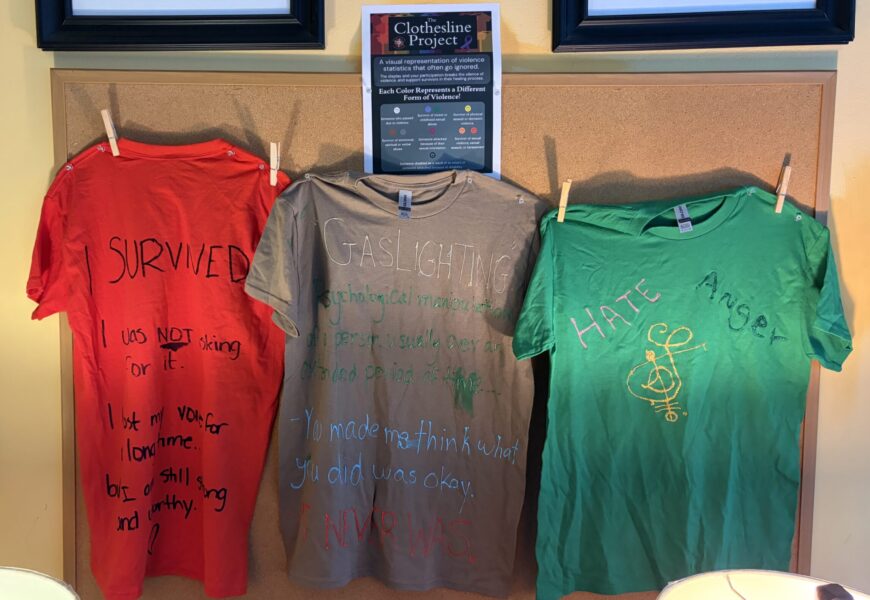
In the past few weeks, you’ve likely seen t-shirts hanging around campus with a myriad of sayings, including “I said no” and “Love is not abuse.”
October is Domestic Violence Awareness Month, and the shirts that you’ve seen around campus are part of the Clothesline Project. This project is a worldwide campaign to raise awareness about different kinds of abuse and to give survivors a chance to spread their story.
The official Clothesline Project website says the effort began in the 1990s in Cape Cod. It has been an annual display at Connecticut College for roughly four years. The project is run by the Office of, now, Community Advocacy and Sexual Health (formerly the Office of Sexual Violence Prevention and Advocacy).
The College Voice spoke with Assistant Dean of Community Advocacy and Sexual Health Nicole Powell to learn more about the display.
The display used to be in Crozier Williams for one day, Powell said, but she found that it was more costly. Spacing out the display has allowed it to reach more students.
Each shirt color represents a different experience. A white shirt, for example, represents those who have passed away due to domestic violence. Purple represents those attacked for their sexual orientation or gender expression.
The shirts are strategically placed in high-traffic areas, such as Harris and the Athletic Center, to gain more attention. All students are encouraged to create a shirt as a form of therapeutic expression and anonymous form of advocacy.
In this conversation, The College Voice passed on one student’s concern about the project: The project displays triggering language in incredibly visible areas that may upset some people, specifically survivors of domestic violence. Regarding the concern of viewer discomfort, Powell said the display “is supposed to make people uncomfortable. We want people to get uncomfortable with domestic violence. That’s part of prevention.”
Powell encourages students to discuss this discomfort with their peers or confidential advocacy services.
In response to a question about whether this installation would be triggering for people, Powell stated that the office “wants folks to reach out for support and to be reminded of what their resources are if they are ever impacted by these types of behaviors or actions.” The Clothesline Project is trying to balance raising awareness while protecting survivors.
If you or anyone you know is struggling with either the project’s visual displays or domestic violence, please reach out to on- or off-campus resources.
On campus, confidential advocacy centers are available in the Unity House and LGBTQ+ Center. You can also reach out to counseling services and Student Health Services for confidential support.
Off campus, the Safe Futures hotline and the Sexual Assault Crisis Center of Eastern Connecticut are available.
Whether you are a viewer of the project or a participant, know that you are not alone.