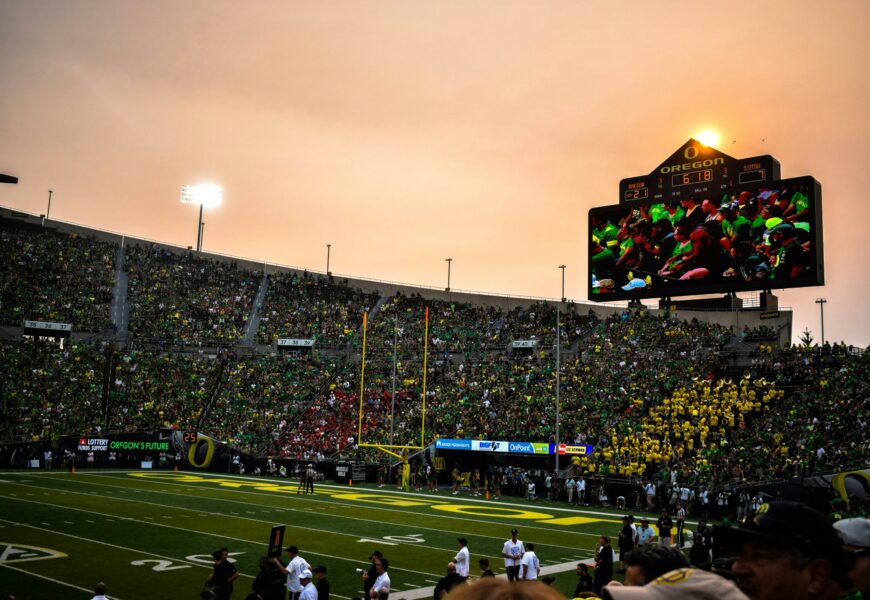
Courtesy of Jake Weirick
What started with conference realignment, and has now turned into the transfer portal and NIL era, is slowly ripping away at college sports and ruining the games we love. How is something we thought would make college sports so much more enjoyable, instead turning fans and coaches away from the industry and creating all sorts of havoc to the point where the President of the United States needs to get involved? Well, it’s not quite as simple as a one step solution or an easy fix to get back to where we were a few years ago.
Flashback to July 2021, a year and a half past the peak of the COVID-19 virus. Things were slowly looking like they would eventually get back to normal. Stadiums were filling back up with fans, and tailgate scenes were as active as ever, with college sports fans ready to enjoy the biggest games once again. However, two bigger moves were in store which NCAA rules officials and even the U.S. government still does not have an answer to. The date is July 1st, 2021, and NIL is finally made legal, allowing college athletes to profit and gain benefits off of their name, image, and likeness. Fast forward a few weeks later, and the Universities of Oklahoma and Texas officially announced their intent and two days later are accepted as new members of the SEC. Athletes now able to make money after all the profits they bring in for their school, and two more football powerhouses added to the already loaded SEC? Doesn’t seem like much of a problem, right? Wrong. With the ability to transfer an unlimited amount of times, and the idea of college athletes signing multi-million dollar deals, college sports will never look the same.
Just look at where we are now, in order to be competitive in college basketball, schools must spend north of 10 million dollars a year on their program. Players who are staying at the same school are now announcing they will be coming back instead of just continuing school, and are forgoing professional opportunities (or even leaving professional opportunities) to stay or go to college. The path for an 18-year-old senior in high school to go play somewhere as a freshman has never looked worse. Between redshirting, JUCO years no longer counting as burning eligibility in some cases, and European and even some American pros going down to play college sports, the sport has never had less clarity than it does right now. So many questions are left unanswered: Where does a player who spends four years at four schools graduate from? How do schools with less money invested in sports compete with the major programs? What will mid-majors look like if every good team just gets up and leaves for a better conference? This has caused so many issues and really stirred up the whole landscape of what programs and coaches should do moving forward. It feels like after almost every game now at least one coach is asked about the transfer portal and NIL and where it has left the sport, and many have gone on rants exposing their dislike with the current rules and regulations, but a seeming powerless NCAA is being taking advantage of and has no answer for these issues.
Some extreme examples include players who have legit played in the NBA, taking visits to colleges and going back to play at the collegiate level. The Michigan Wolverines just won the NCAA basketball national championship with five transfers, none of whom started their careers at Michigan. It is one thing for a coach to get a better job and take his or her players with them (Iowa and Ben McCollum), but in almost every other case it is time to call a college offseason what it is: free agency. And you can’t blame the players for taking the opportunity to make more than a lot of pros are making. The NCAA is left in a mudhole in terms of legality issues and defending itself against lawsuits, because it has lost its main ways of power and authority seen in limiting cash flows from schools to players, and determining specific eligibility rules.
This can be seen in the 2021 Supreme Court Case Alston v NCAA that determined hiding the benefits that these schools are making from its players violates federal antitrust laws. As a result of this court case, players, coaches, local judges and officials, and even families are using every kind of loophole they can possibly think of to gain an extra year of eligibility or to somehow work the system to their own benefit.
So where do we go from here? Well all hope is not lost, and because all of this is going on and better players are staying in college longer, the quality of the sports are increasing and the talent level is as high as it’s ever been. We have heard different coaches and pundits offer their opinions and possible changes, whether it’s contracts like in pro sports, going back to a transfer limit, or an extended period of 5 years to play regardless of level and redshirt eligibility.
This is where the U.S. government has started to and needs to continue to play a major role, starting with President Donald Trump issuing an executive order on April 3rd, stating athletes will have 5 years to play, with one penalty-free transfer, as well as new NIL standards. This executive order is set into place on August 1st of this year, however that does not mean that these are the new rules and everybody must play by them. Legal challenges are expected to at least delay if not prevent this from ever happening, so a plan of action like this actually being implemented is most likely still a couple of years away. However, this is the biggest stride we have seen in terms of action since college sports started to spiral out of control, and it is expected that something similar will eventually pass. This order would delete federal funding from schools that do not comply, a major risk that most public colleges and universities do not want to mess with. The hope for those wanting to see college sports back in their purest forms is for this to bounce around congress for a little bit before reaching an agreement and officially being enforced under every school throughout the country.