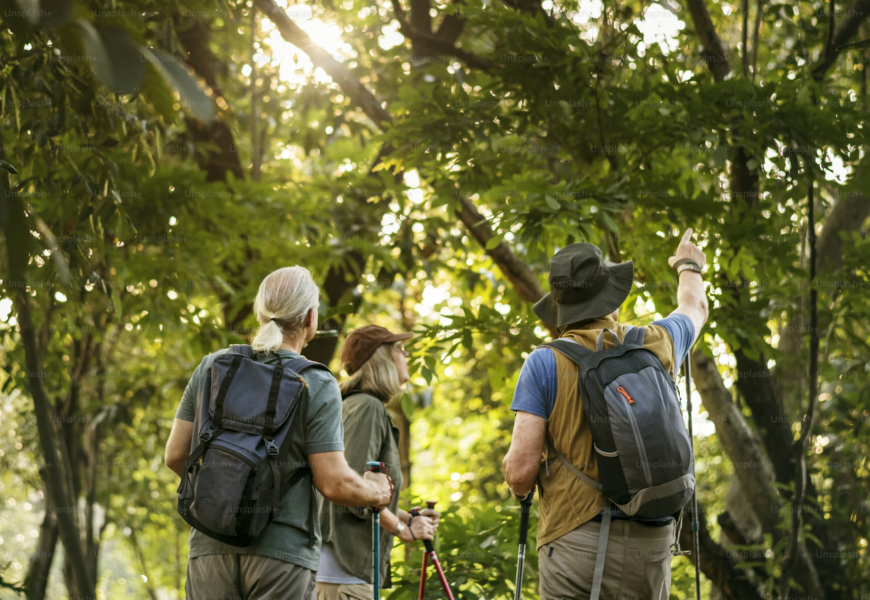
Courtesy of Curated Lifestyle
It was only recently that I discovered Listers: A Glimpse Into Extreme Birdwatching, an independent documentary released last year. The film follows two brothers, Owen and Quentin Reiser, as they travel the United States in search of as many birds as possible. The movie caption sums up the story succinctly:
“Two brothers learn about competitive birdwatching by becoming birdwatchers—spending a year living in a used minivan, traveling the country to compete in a ‘Big Year’.”
Their ‘Big Year,’ birding jargon for documenting as many species as possible in a calendar year, took them to nearly every region of the U.S, and landed them 579 species by December. The brothers lived in a van, sleeping in Cracker Barrel parking lots and camping for days at a time in the middle of the woods. They cooked their meals on a hot plate, trailed birding tour groups for hours, and met locals in nearly every place they went. It started as a joke at first—an experiment to find out what “extreme birdwatching” really meant. But over the course of the year, the duo was enveloped in the community, and the hobby took on a whole new meaning.
Similar to the Reiser brothers, I clicked on the YouTube recommended documentary with no prior interest in mind. But I’ll try anything once, so I gave it a shot. The film itself is an artistic pleasure. The direction and cinematic style were playful and witty, and especially relatable for a person with no ornithological experience. What I found most enticing, however, was the thrill of seeing a new bird species. At any given moment, the brothers might get an alert on their phones from an app called eBird. Developed by the Cornell Lab of Ornithology, eBird tracks bird sightings based on user-generated data and compiles maps of migration and nesting patterns used in the lab’s research.
“This is the first time we’ve had fine-scale information that allows us to understand the drivers of declines much better than we’ve ever been able to before,” says Amanda Rodewald, faculty director of the Cornell Lab’s Center for Avian Population Studies, on the lab’s website. “eBird Status and Trends gives us a new lens to detect and diagnose population declines and to respond to them in a way that’s strategic, precise, and flexible.”
The eBird app allows users to track their sightings using checklists, a live recording feature built in to document and record birds as you find them at any time (hence the film name Listers). Many dedicated birders make thousands of checklists over the course of their careers—some document every bird they find while others only track “lifers,” or a species they haven’t recorded before. Paired with the Merlin Bird ID app, also developed by Cornell Lab, users can record audio or snap pictures of birds to identify what they are, as well as read about the habits and lifestyles of the birds they encounter. So, the brothers weren’t only making checklists for fun; they were helping protect biodiversity, too.
Over that year, the Reiser brothers turned from hobby-birders looking for a quick laugh to bona fide naturalists competing for the top spot on the eBird species leaderboard. It was inspiring, in a strange way. Watching them wake up at 5:00 am to drive hours away, trek through a grassy marsh, and climb to the top of a tree with no equipment, all to see something called a Dickcissel.
Naturally, I downloaded both apps and got to work.
My intention wasn’t necessarily to copy what I saw in the documentary. I didn’t own any expensive cameras, fancy field guides, or even a pair of binoculars. But I decided to take a walk in the Arboretum anyway. At first, using my ears served me better than my eyes. Hearing a new bird song, I would activate my phone’s Merlin ID and record the sound. I’d then attempt to find the bird with my naked eye, although without binoculars, I lost sight of them quite easily. My first outing didn’t produce much—a Northern Cardinal, two Canada Geese, a Brown-headed Cowbird, and a Pileated Woodpecker (that woodpecker is still my claim to fame). That day was successful nonetheless, as I felt that I had done something to connect with nature like I hadn’t before. Call me cliché, but in my raw first attempt, I had achieved a greater bird’s-eye view of the world around me; pun fully intended.
I began to wonder about the birding community at Conn and whether there was interest in this part of the state. The first person I talked to was a student, James Tornetta ‘29. He’s an avid bird enthusiast and wildlife photographer, and has been taking pictures of them since he was young. He even won this year’s Connecticut College Arboretum Photo Contest.
“I like the challenge of getting a good photo of every species, which I’ll never do,” he said. “I love editing a photo and then sharing it with people, and then entering into contests and stuff.”
He’s currently trying to win this year’s Audubon Photography Awards, of which the grand prize of $5,000 would go towards financing new camera equipment for his photos. He recognized that while bird watching can be important for many reasons, it’s not for everyone. Those who do choose to indulge, however, should take conservation seriously.

Courtesy of James Tornetta
“The most important thing is if people support it, then people will protect birds and their conservation,” he said. “Two billion birds die every year, mostly because of outdoor cats and window positions. Most species of birds we have are declining, so the more people who are interested in it, even if it’s just for a hobby, the more awareness there would be around the community.”
Oh, yeah. And that 19-year-old from the documentary who became the youngest birder in history to identify more than 700 species in a year, Tornetta knows him. His name is Ezekiel Dobson, and the two met while near Tornetta’s home in the Greater Philadelphia area, trying to find a rare bird.
“In 2024, there was a common swift from Europe that showed up, like, a big rarity, and he flew in from Kentucky up to Cape May, New Jersey, to see it,” Tornetta said. “So, I met him there.”
All in all, Tornetta is a serious birder who cares about the chase of finding a new bird and the benefits for nature that could surround it. But for those just getting started, he recommends keeping up with the Connecticut Audubon Society, an independent non-profit dedicated to conserving birds and their habitats. There, you can find information about bird species in your area, habitats, and organized sanctuaries, and the best places to see birds near you. Around Southeast Connecticut, Tornetta recommends the Arboretum, Harkness Memorial State Park, and Barn Island. I was also told about the Roger Tory Peterson Estuary Center in Old Lyme, owned and operated by the Connecticut Audubon Society, named after the famed naturalist who created the modern birding field guide.
I had found at least one student at the college who was invested in the community. But I wanted to figure out why people were interested in birds in the first place. So, I looked for someone in the professional field who could give me an answer.
While not a designated ornithologist, Jennifer Pagach Lamb comes pretty close. She works as the director of the Goodwin-Niering Center on campus and as an adjunct professor teaching Intro to Environmental Studies. She said that she grew up in a rural part of Connecticut and developed her love for nature by spending time outdoors. She wasn’t serious about birds until later in life, however.
“The real birding bug caught me during the pandemic,” she said. “My husband and I would go to the park after work, where it was so good to focus on that, not only for my eyes, for someone that stares at computers all day, but because I have so much open space near where I live.”
She told me her journey started off slow until a student at Conn piqued her interest in it. Skyler Kardell ‘24 came to the college to work with Robert Askins, a professor of biology who is nationally recognized for his research on the ecology of migratory birds and the impact of forest fragmentation on their populations. Kardell, who was especially interested in ornithology, was crushed to find out on his first day of college that Askins had retired, along with the ornithology class he taught every year.
“Right then and there, I decided I would make it up to him,” Lamb said. “Through a connection to Bob Askins via the Connecticut Audubon EcoTravel group, we were able to get a scholarship for him and me to go birding in Scotland. Since then, we’ve added bird surveys in the Arboretum, and there has been a real uptick in interest around campus.”
Part of this uptick, Lamb says, might be part of a larger social movement surrounding environmentalism. Social media today has done a remarkable job of cultivating personalities and curating “aesthetics” around various lifestyles. Take a scroll through your Instagram feed, and you’re likely to find “crunchy granola girl,” “cottage core,” and “forestpunk,” all of which convey a romanticized image of nature achievable for anyone willing to walk outside.
“I think birding is the new mushrooms or regenerative farming,” she said. “I used to think you had to be my age to get into birding until I realized how many young people are interested in it. We have a number of students in the [Goodwin-Niering] center who like to go birding even though it’s not their main center interest.”
Lamb even mentioned Listers and how birds have become cool through popular culture. She also pointed out that traditional birding, specifically birding trips and tours, has been dominated by older, retired people who have thousands of dollars to spend on a birding experience. Today, that’s no longer the case. There are so many ways to enjoy birds, she says, no matter what level you are or how much money you have. At its simplest level, she thinks birding is a part of nature to strive for and look forward to. During the spring and fall migrations, unplugging from technology, using your senses, activating your brain, and experiencing nature have both personal and ecological benefits.
“Birds are such a delicate, yet powerful, symbol,” she said. “They’re a huge indicator species of climate and environment. In just watching the birds, you’re already connected to something that’s really special.”
Then, like a Peregrine Falcon speeding towards its prey at 200 miles per hour, the answer hit me. The point wasn’t to just look at the birds, it was to look for them. I no longer think the name “bird watching” does this activity justice. To watch with no context is plain, flat, and uninteresting. To bird is to experience, in any way that you can. The Reisers had it right all along. It isn’t only the birds themselves that connect this community—it’s the adventure of finding them. In flying across the country for a rarity, James Tornetta made a new friend, and a high-profile one at that. The zeal of one student forged Jennifer Pagach Lamb’s lifelong interest in birding, connecting her to nature in a new way.
The trends of young people today have made a dramatic U-turn—the return of vinyl, wired earbuds, thrifted jeans from the 1980s, and taking pictures with a film camera, to name a few. In what’s been dubbed the “analog movement,” Gen Z is reverting back to a simpler time in life, one where social media doesn’t exist and people are forced to interact with things in real time and face-to-face. Environmentalism may fit into that picture similarly well, even birding. There’s a charm to simple things in life, like walking through your local park and looking up to see what’s chirping at the top of that tree. The Reiser brothers posted Listers to YouTube for free with no interrupting advertisements. The film was solely financed by viewer donations, attached as a link to the caption of the video. The point may have been to get people to see that charm and buy into a part of life that is often overlooked by the everyday person.
Next time you’re outside, take a look around and notice what you see. Whether you wish to make a checklist, start an eBird account, or even identify what’s around you, the magic is in the adventure that comes with experiencing. Undoubtedly, you’ll feel more connected to nature. But just as I found this community at Conn, perhaps unexpectedly, you’ll find your community too.
For more information about the birding community at Connecticut College, reach out to jpagach@conncoll.edu or to myself at eiurillih@conncoll.edu.