Courtesy of Tong Su
The New York City Marathon is not known for being particularly fast. Because of how the course is structured, the winning times are not remarkable. In recent years, the winning times have ranged from 2:05 to 2:08—around 4:45-4:50 per mile—usually dominated by Kenyan or Ethiopian runners. It’s known to be a very difficult course because of the hills and the grueling bridges, as well as the notorious 160-foot climb runners have to endure for the first mile getting out of the gates. Indeed, the Staten Island start line is known to be one of the scariest; with so few spectators, all you can hear is the sound of thousands of footsteps around you and the beeping start sound of hundreds of watches. You traverse through Brooklyn for 13 miles, followed by Queens, then Manhattan, the Bronx, and Manhattan again, finishing south, straight towards Fifth Avenue. Late in the race, runners experience a 100-foot climb that apparently feels like you are slugging along through Jello.
The biggest complaint about the NYC marathon is the 18th mile. At the most difficult point of the race, runners think they’re about to be greeted by energetic crowds of people. But on the Upper East Side, the crowds actually begin to shrink. People also complain about the bottlenecking on this course, areas where hundreds of runners get squeezed through tight course spaces. This doesn’t prove to be much of a challenge for the professionals who continue to move through these parts at breakneck speed.
Speaking of professionals, this year’s field was stacked. We even saw the first major marathon in recent years to be won by a European athlete; a shift from the typical domination by East Africans. A name that has been circulating around the world of distance running recently is that of Nike professional and former Brigham-Young University athlete Conner Mantz. Mantz is the official American record holder for the half marathon, marathon, 15K, and 20K distances. Before any of that, he was one of the most dominant runners in NCAA DI cross country history. One of the top competitors on the starting list, Mantz was poised to secure the top American and potentially wind up on the podium. Yet after suffering two sacral stress fractures earlier this year, the battle for top American finisher became even more uncertain.
How did the actual race play out? In a historically unexpected way.
On the men’s side, Swedish athlete Andreas Almgren won in dominant fashion. One of the top track athletes in the world this year, his transition to the roads has been seamless. After a victory at the World Athletics Road Running Championships in the half marathon, where he set a European record in 58:06, Almgren’s marathon debut was highly anticipated. Often praised for undertaking remarkably high-level training, well beyond the regimen of most professionals, predictors saw him battling for the win against competitors like Yemaneberhan Crippa, Kamohelo Mofolo, and Benson Kipruto. Almgren went on to win in 2:06:01, cementing his status as one of the top marathoners in the world this year. Conner Mantz would eventually fall back to 11th, while Zouhair Talbi would take the top American spot in 2:06:43.
In the women’s race, Kenya’s Sheila Chepkirui won in 2:24:36, repeating her win from 2024. Jessica McClain, the top American finisher, went on to secure second only six seconds behind the winner. She was the first American woman to place on the podium since 2018.
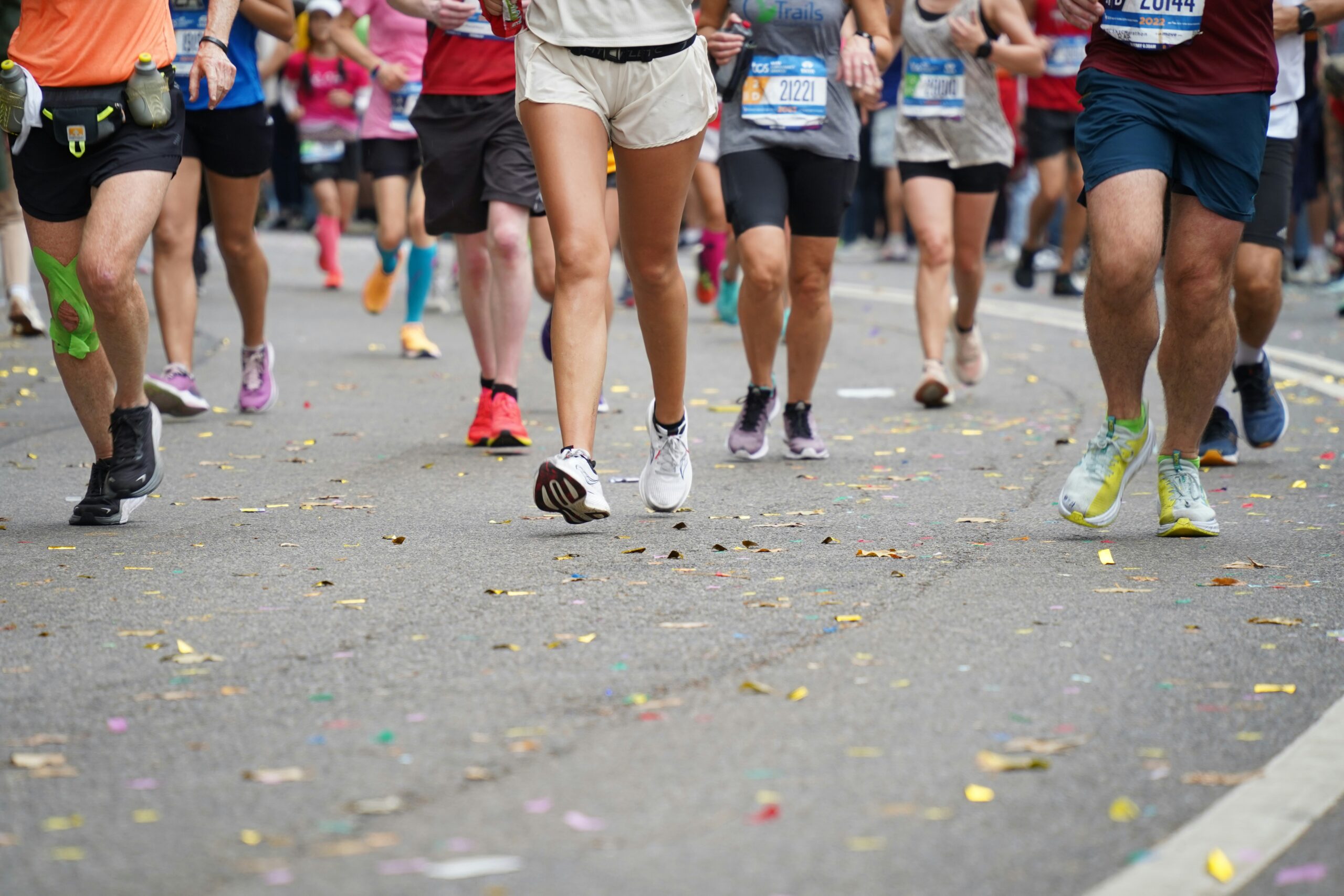
All in all, this was one of the most entertaining New York City marathons in recent history. For only the third time in 17 years, we saw a non-African athlete win the race—in a blazing-fast time, too. The Americans showed up spectacularly, and proved just how competitive the United States is on the international road running stage. This year, more than 60,000 runners participated, and more than two million spectators watched along the streets of New York City.
Just another year and another win for the “city that never sleeps.”